
Last updated September 10, 2026
Full 25-point door and opener safety check with every visit - springs, cables, rollers, tracks, and your LiftMaster or Chamberlain opener included
You get a price before we start. It does not change when the truck arrives.
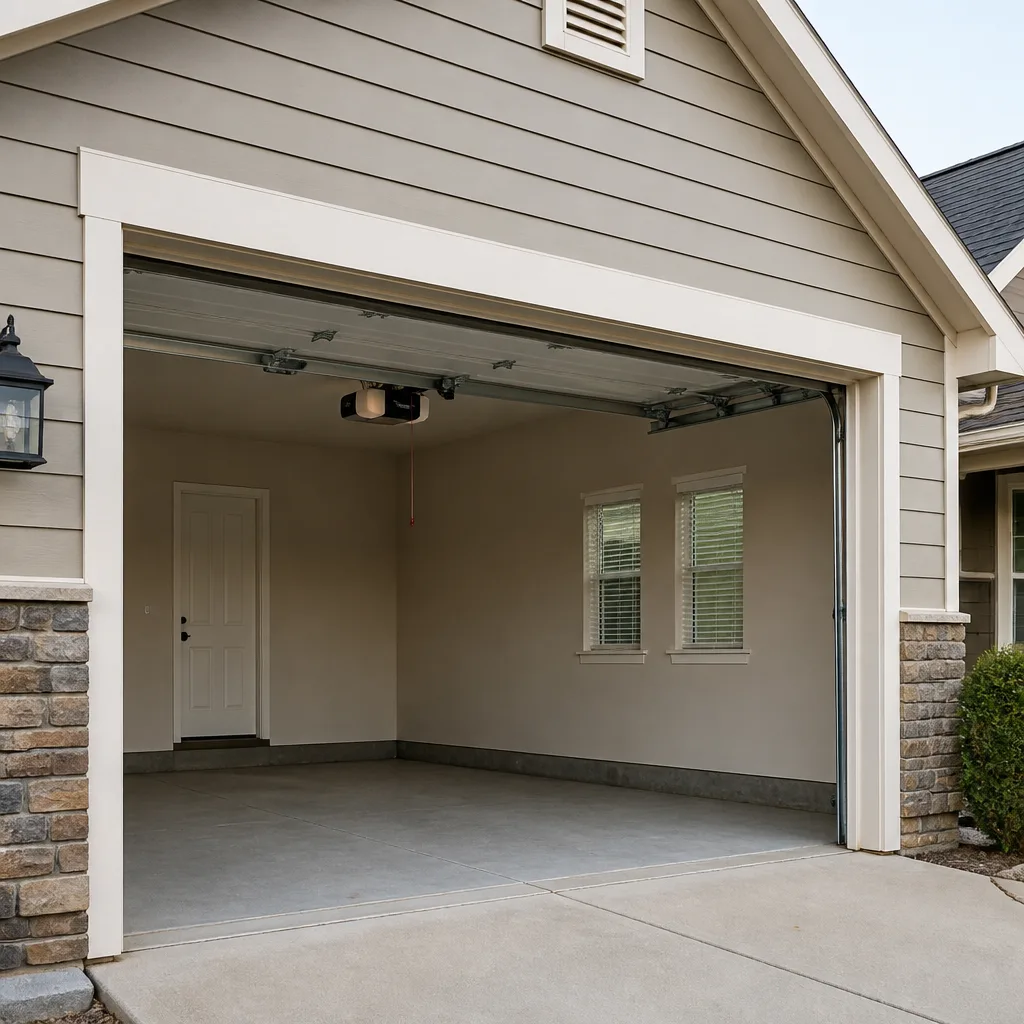
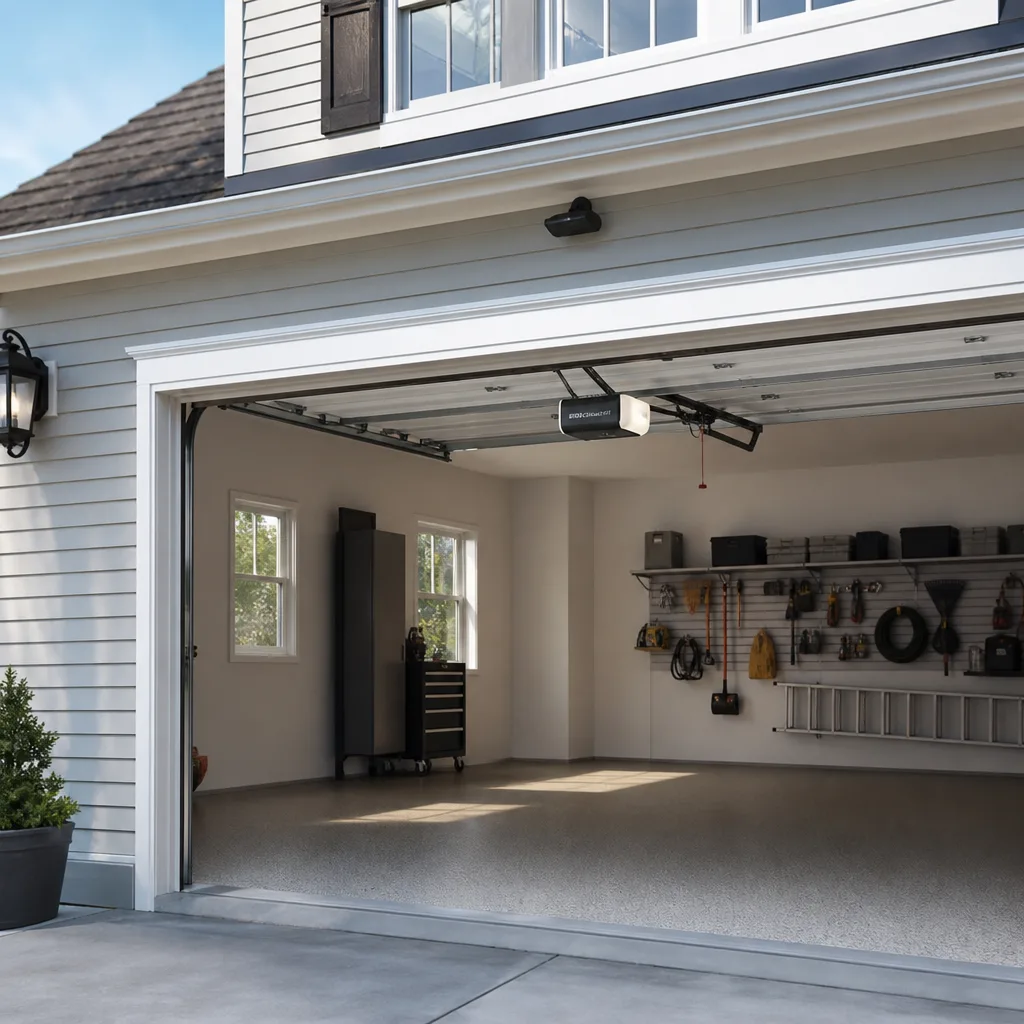
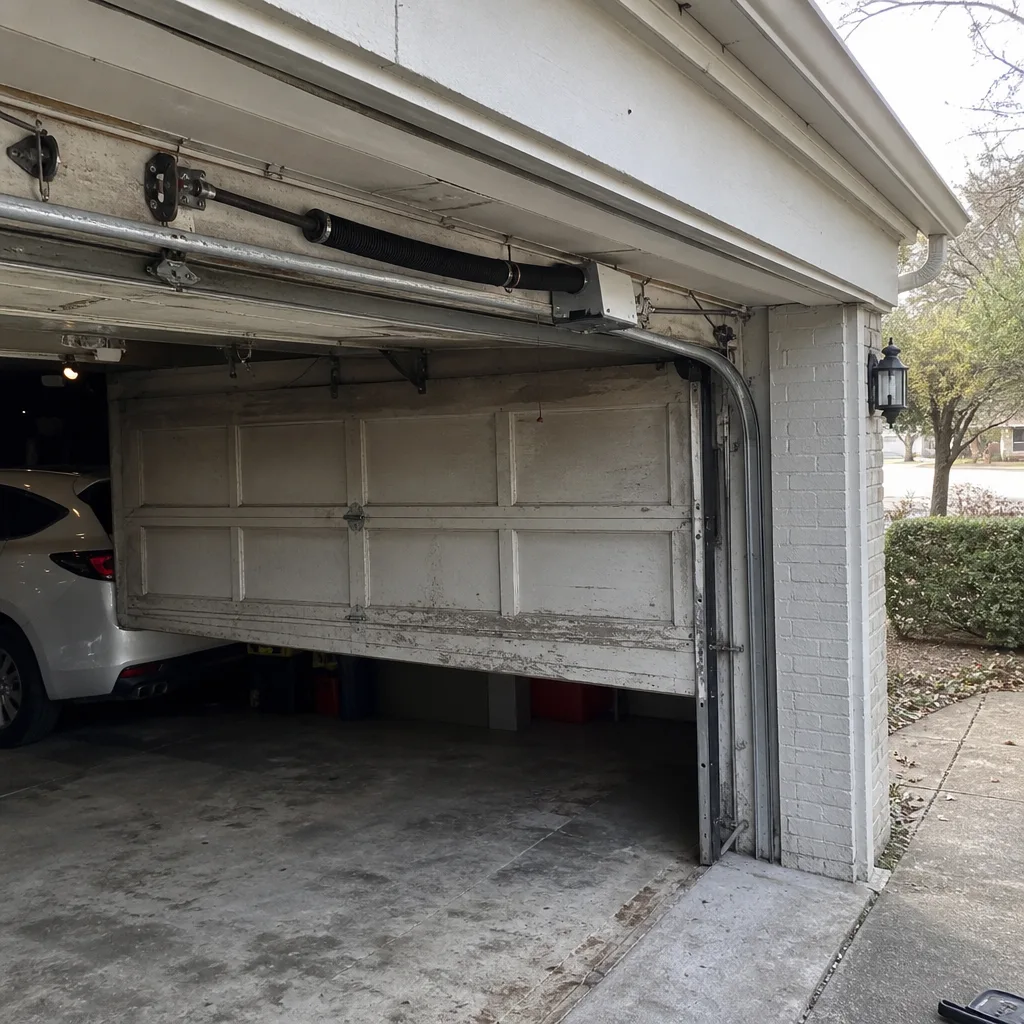 Before
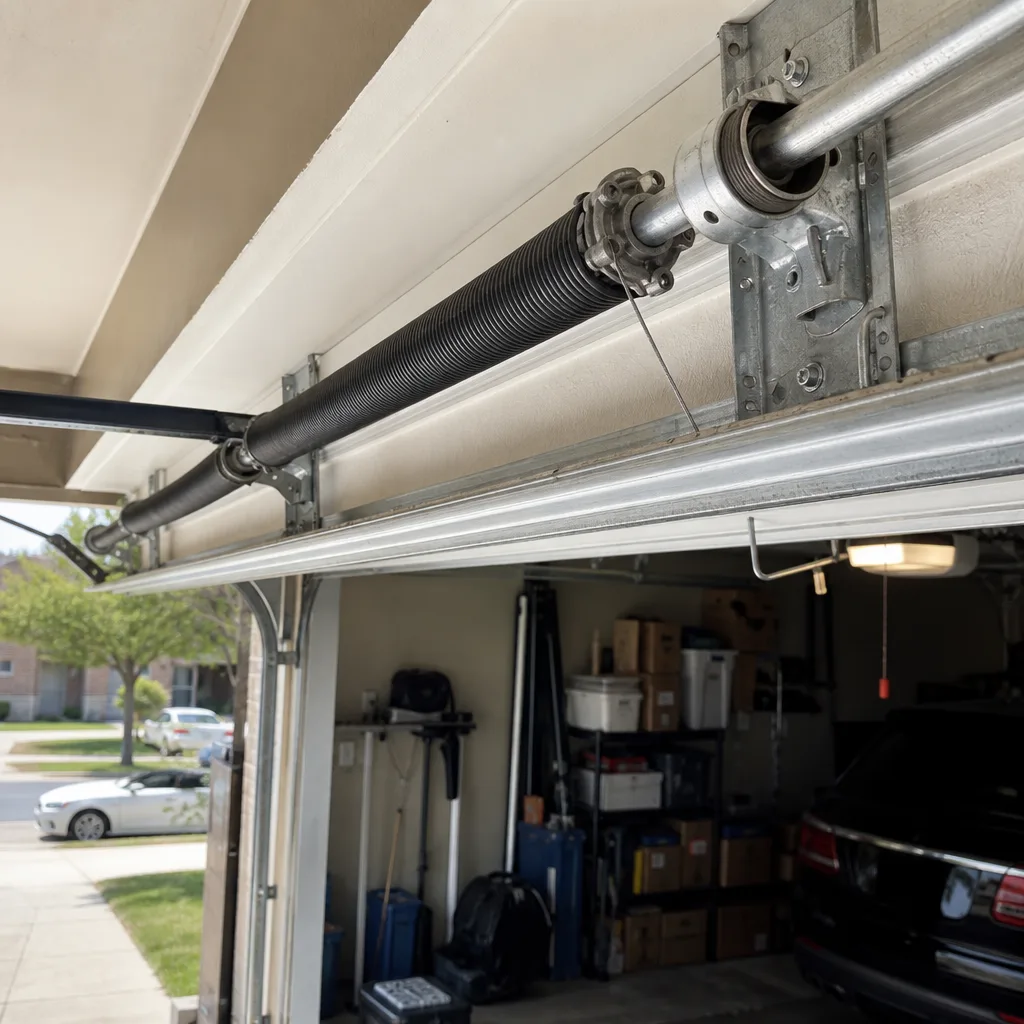 After
After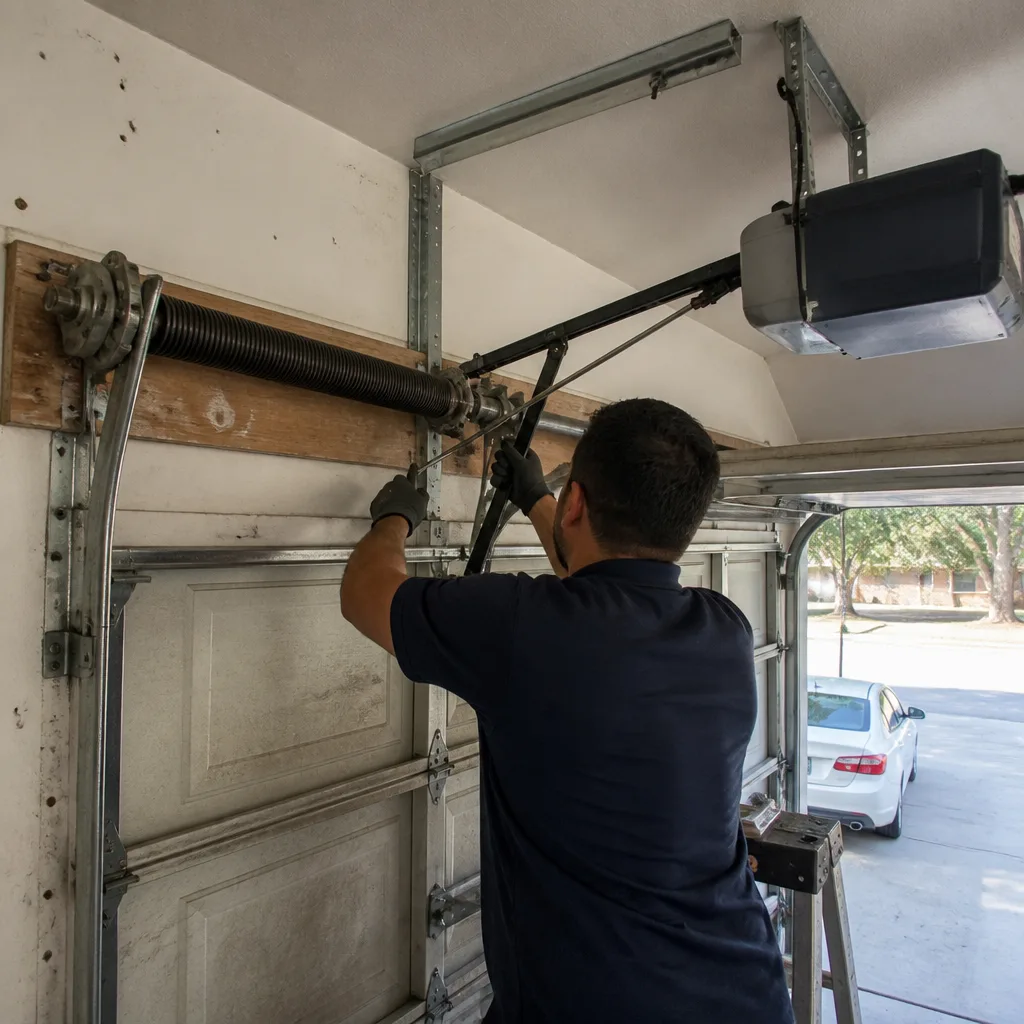 Before
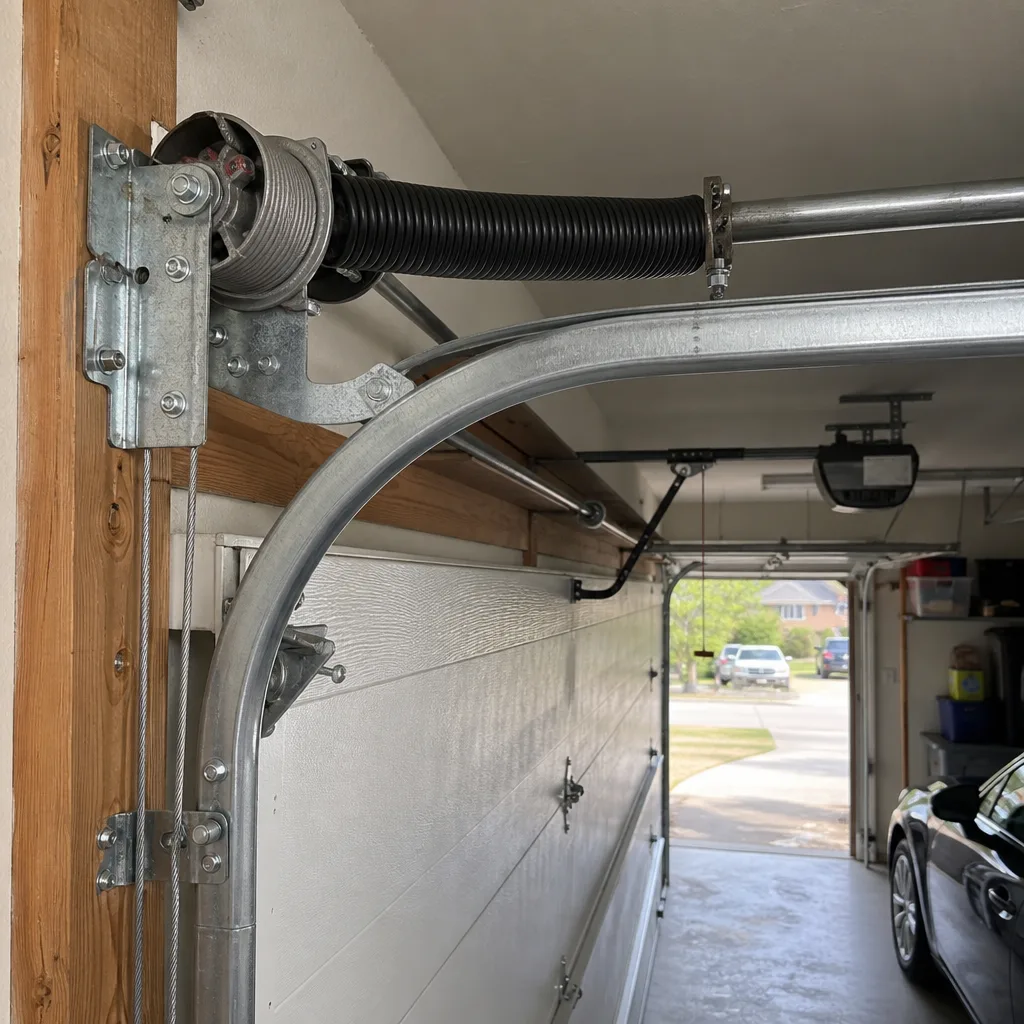 After
After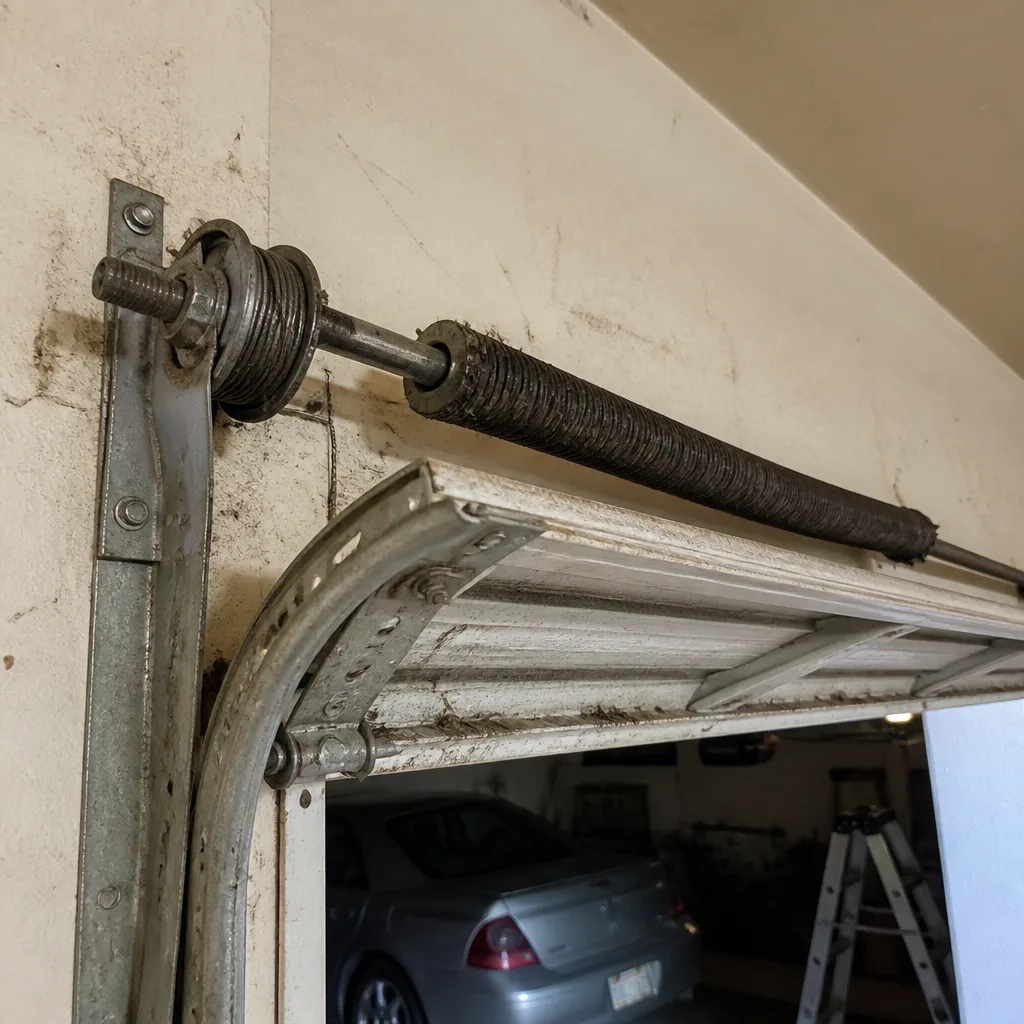 Before
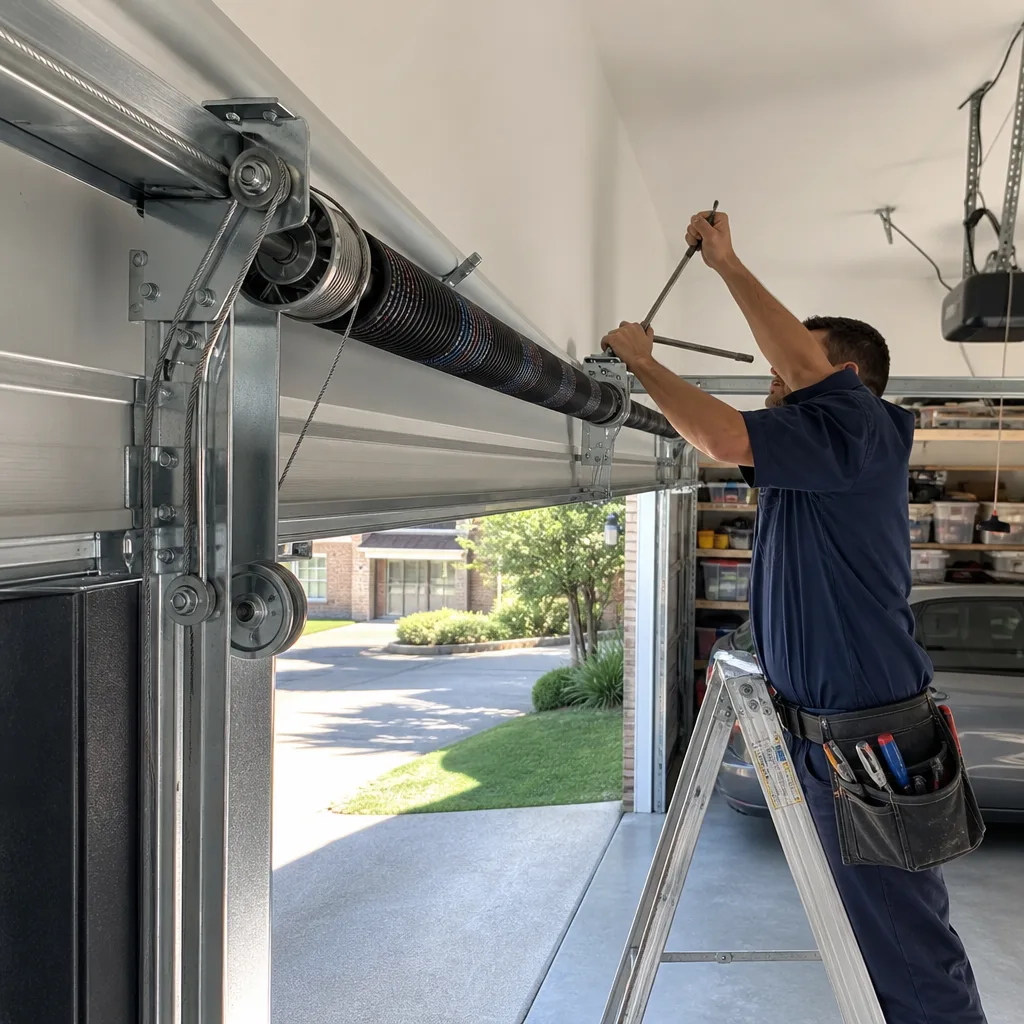 After
AfterDIY vs Professional Garage Door: The Grapevine Homeowner’s Decision Guide
Every year in Grapevine, we meet homeowners who started a Saturday garage door project and ended up with a bent panel, a stripped gear, or worse. The DIY versus professional question is not about whether you are handy. It is about whether the task you are considering carries consequences that outrun the money you might save. In a city where summer humidity swells wooden door frames and winter northers snap brittle springs, the wrong decision can cost far more than a service call. This guide sorts every common garage door job by actual risk, shows what your insurance adjuster will ask if something goes wrong, and tells you exactly what you can source locally versus what requires a trade account.
Quick Answer
Most Grapevine homeowners can safely handle lubrication, weatherstripping replacement, remote programming, and sensor cleaning themselves. Opener installation, panel replacement, and spring work should be left to professionals due to injury risk, warranty requirements, and insurance implications. The dividing line is not skill; it is whether a mistake can cause bodily harm or void your homeowner’s coverage.
Table of Contents
- Task-by-Task: What You Can Do, What You Shouldn’t
- The Insurance Reality: How Texas Policies Treat DIY Garage Door Work
- Parts and Tools: What You Can Actually Get in Grapevine
- The Highest-Value DIY Tasks (And the One That Voids Warranties)
- Time and Cost: Three Real Grapevine Scenarios
- When Springs Fail: Why Torque Is Different Than Tension
- Common Mistakes to Avoid
- When to Call a Professional
- Frequently Asked Questions
Task-by-Task: What You Can Do, What You Shouldn’t
We have organized every common garage door job into three categories. The classification is based on what happens when something goes wrong, not on how mechanically inclined you are.
Safe DIY
- Lubrication of rollers, hinges, and tracks - Use a silicone-based spray (not WD-40, which attracts grit). Takes 20 minutes. No disassembly required.
- Weatherstripping replacement - Bottom seal and side seals slide into retainer channels. Buy by the foot at Grapevine’s Home Depot or Lowe’s. Match the profile exactly; there are six common shapes.
- Remote and keypad programming - Every major brand publishes steps. LiftMaster and Chamberlain use a purple, yellow, or orange learn button; the color determines the frequency. Write down your model number first.
- Safety sensor cleaning and alignment - Wipe lenses with a soft cloth. Loosen wing nuts, adjust until both LEDs glow steady, tighten. The garage door will not close if one LED flickers.
- Manual release cord operation - Know where it is and how it works before the power goes out. Pull straight down, then back toward the motor to re-engage.
DIY With Preparation
- Decorative hardware installation - Magnetic kits are foolproof. Through-bolt styles require drilling fiberglass or steel panels without denting. Use a backing block inside the panel.
- Opener battery backup replacement - Chamberlain and LiftMaster units use specific 12V batteries. The part number is inside the housing. Disconnect power first.
- Track bracket tightening - Lag bolts loosen over time from vibration. Check with a socket wrench, but do not adjust track alignment itself. A millimeter of misalignment causes binding.
Professional Only
- Torsion spring replacement - A standard 16-foot steel door in Grapevine uses springs rated for 10,000 cycles and wound to roughly 150 foot-pounds of torque. The winding bars must be steel, inserted fully, and used in a specific sequence. A slipping bar or miscounted turn can break bones or worse. We have seen homeowners who watched three videos and still ended up in the emergency room.
- Extension spring replacement with safety cables - These run parallel to the horizontal tracks and are under less torque than torsion springs, but they are still stretched steel under load. If a safety cable is missing or frayed, a broken spring becomes a projectile.
- Panel replacement on sectional doors - The new panel must match the gauge, profile, and insulation value of the remaining panels. A mismatch stresses hinges and rollers. Clopay and Amarr panels are not interchangeable between product lines.
- Opener installation on doors over 8 feet tall or 150 pounds - The opener must be sized to the door weight and cycle count. A 1/2-horsepower unit on a heavily insulated 16-foot door will burn out in months.
- Any work requiring permit inspection - Grapevine requires permits for new door installations and structural modifications. Self-performed work without permit and inspection can block home sale disclosures.
In our experience across Grapevine neighborhoods from Dove Creek to Timberline, the jobs that go wrong fastest are the ones where a homeowner correctly identified the part but missed the specification. A spring with the same wire diameter and length but a different wind direction (left-wound versus right-wound) will fail catastrophically within days.
The Insurance Reality: How Texas Policies Treat DIY Garage Door Work
Texas homeowner’s insurance policies contain a standard exclusion for damage caused by “faulty workmanship” performed by the insured or a non-licensed contractor. This matters more for garage doors than for most home repairs because the door is a moving structural element attached to your house.
Here is what we have learned from adjusters and from homeowners who called us after a claim denial.
What the Adjuster Looks For
- Permit and inspection records - For installations in Grapevine, the city requires permits for new door systems. No permit means no inspection, and no inspection means the insurer can classify the work as unverified.
- Manufacturer installation requirements - LiftMaster and Chamberlain openers specify that warranty coverage requires “installation by a qualified technician.” A DIY install that later causes fire or water damage (from a failed safety reverse, for instance) can void both the opener warranty and the homeowner’s claim for resulting damage.
- Parts provenance - Springs and cables must meet the door manufacturer’s specification. A spring from a big-box store with the wrong IPPT (inch-pounds per turn) rating is evidence of improper repair if it fails and damages a vehicle or injures someone.
- Documentation of the original failure - If a DIY spring replacement fails and the door crashes onto a car, the adjuster will ask why the first spring failed, whether the second was correctly specified, and whether the homeowner had the tools to measure door weight and track radius.
What Voids the Claim Entirely
Self-performed torsion spring work that causes bodily injury is almost always excluded under the policy’s “intentional or expected injury” clause. The insurer’s position: a reasonable person who researched the task would know the risk. This is not theoretical. We have spoken with Grapevine homeowners who faced five-figure medical bills after a spring bar slipped.
For property damage, the critical question is whether the work required a license or permit. See our full guide to Garage Door Permits, Codes & Inspections in TX: What You Need to Know for details. Grapevine does not license garage door technicians at the state level, but the city does require permits for installation. Unpermitted work that later causes structural damage (a heavy door pulling away from the header, for instance) gives the insurer grounds to deny.
The safe path: keep receipts and warranty cards for any DIY work, photograph before and after conditions, and know that professional garage door repair in Grapevine carries both liability insurance and the documentation that supports your claim if something goes wrong later.
Parts and Tools: What You Can Actually Get in Grapevine
The internet makes every part look available. The reality in Grapevine is more constrained, and the constraint matters for safety and warranty.
What Homeowners Can Source Same Day
- Weatherstripping, bottom seals, and retainer channels - Home Depot on State Highway 114 and Lowe’s on William D. Tate Avenue stock the common profiles. Bring a 6-inch sample to match.
- Remote controls and keypads - Universal remotes work on most openers under ten years old. For newer models, especially LiftMaster’s MyQ-enabled units, you need the exact part number. The learn-button color (purple, yellow, orange, green, red) determines compatibility.
- Standard rollers and hinges - 2-inch nylon rollers and #1 through #4 hinges are shelf items. Do not substitute 3-inch rollers on a door built for 2-inch; the track radius is wrong.
- Lubricants and cleaners - Silicone spray with Teflon, white lithium grease for screw drives. Avoid graphite on nylon parts.
What Requires a Trade Account or Special Order
- Torsion springs - The correct spring is determined by four measurements: wire diameter, inside diameter, overall length, and wind direction. Then you calculate the IPPT based on door weight, track radius, and drum size. No big-box store in Grapevine stocks the full range. What sits on the shelf is often a “common size” that fits nothing precisely. A mismatched spring cycles fewer times, strains the opener, and can snap the cable.
- High-cycle springs - For doors used more than four times daily, 25,000- or 50,000-cycle springs are worth the cost. These are factory-ordered to spec.
- OEM panels and sections - Clopay, Amarr, and Wayne Dalton each use proprietary profiles. A 2019 Clopay Gallery Collection panel will not match a 2024 version if the embossing pattern changed. We order through factory distributors in Dallas-Fort Worth with next-day delivery.
- Commercial-grade openers and jackshaft motors - LiftMaster’s 8500W and similar units are not stocked for retail. They require specific header space, electrical configuration, and door balance that a technician verifies before ordering.
- Specialty tools: winding bars, spring gauges, door scales - Solid steel winding bars (not screwdriver substitutes) are 18 inches long and 1/2 or 7/16 inch diameter. A door scale measures actual weight, not estimate. These are trade tools.
In Grapevine’s summer heat, we also see homeowners source weatherstripping that is rated for Arizona dryness rather than North Texas humidity. The wrong compound hardens and cracks in two seasons. We use vinyl with UV stabilizers rated for the Dallas-Fort Worth climate zone.
The Highest-Value DIY Tasks (And the One That Voids Warranties)
Some DIY work saves real money with near-zero risk. Other tasks look simple but carry hidden penalties.
Best Return on Your Time
- Sensor realignment - Takes 10 minutes. Fixes 30% of “door won’t close” calls we receive. The sensors are knocked by trash bins, bikes, or the vacuum hose.
- Remote reprogramming after power outage - The opener forgets paired remotes if the backup battery is dead. Re-pairing takes two minutes per remote once you locate the learn button.
- Track cleaning and light lubrication - Prevents roller binding that strains the opener. Do this twice yearly, before the summer heat and after the last freeze.
- Weatherstripping replacement before winter - A tight seal keeps the garage 10-15 degrees warmer and reduces the load on any HVAC ductwork running through the space. Grapevine’s January lows average 34 degrees; that gap under the door matters.
The Task That Looks Simple But Voids Warranties
Opener force-limit adjustment. Every Chamberlain and LiftMaster unit has dials or digital settings for open and close force. When a door starts reversing on contact, or when it seems to strain, homeowners often turn these up.
This is backwards. Increased force is a mask, not a fix. The door is likely unbalanced, the tracks are misaligned, or the rollers are binding. Raising the force setting overrides the safety reverse system and voids the opener warranty if an injury occurs. Worse, if the door later falls or closes on a person, the homeowner’s liability exposure increases because the safety system was deliberately disabled.
The correct response: check the door balance (it should stay at any height when disconnected from the opener), inspect rollers and hinges, then call if the problem persists. Our garage door opener service in Grapevine includes force and limit verification on every visit.
Time and Cost: Three Real Grapevine Scenarios
These comparisons use actual Grapevine-area parts availability and labor rates, drawn from our Garage Door Cost Breakdown: The Grapevine Homeowner’s Reference for 2026, not idealized online prices. They assume a standard 16-by-7-foot steel sectional door, the most common in Grapevine’s 1980s-2000s neighborhoods.
Scenario 1: Broken Torsion Spring
| DIY | Professional (Mainspring) | |
|---|---|---|
| Parts cost | $80-$140 for springs (if correctly spec’d); $40 for solid steel winding bars; $30 for spring gauge rental or purchase | Included in flat-rate quote |
| Parts sourcing time | 2-4 days special order, or risk of wrong shelf spring | Truck stock, same visit |
| Job time | 3-6 hours first attempt, including research and tool familiarization | 45-90 minutes |
| Risk exposure | Severe injury, door damage, voided insurance | Liability-insured, 90-Day Done Right Promise |
| Total realistic cost | $150-$210 plus your Saturday, plus risk premium | Quoted upfront before work begins |
The DIY path only makes sense if you already own the tools, have done it before, and accept the risk. For a first-timer, the time and hazard outweigh the savings.
Scenario 2: Dented Middle Panel
| DIY | Professional | |
|---|---|---|
| Parts cost | $180-$350 for OEM panel (special order, 1-2 week wait); $80-$150 for salvage yard mismatch | Included in quote; factory order if not truck stock |
| Tools needed | Socket set, helper for 40-80 pound panel, possibly sawhorses | Truck-equipped |
| Job complexity | Disconnect opener, release spring tension (dangerous), unbolt hinges, swap panel, re-tension, re-align | Single visit, typically 2-3 hours |
| Hidden issue | Matching embossing and color fade; 5-year-old door panels do not match new | Factory color match or full-door recommendation |
Panel replacement is the job most underestimated by homeowners. It requires spring release and re-tensioning even if the spring itself is fine. That step alone moves it to professional-only for most people.
Scenario 3: Opener Swap (Like-for-LReplace)
| DIY | Professional | |
|---|---|---|
| Unit cost | $200-$500 retail (1/2 to 3/4 HP chain, belt, or screw drive) | Trade pricing offset by installation value |
| Rail assembly | Must be cut to exact door height; one chance to get it right | Measured, cut, and verified on site |
| Electrical | Existing outlet must be within 6 feet; otherwise licensed electrician required | Identifies code issues before quote |
| Warranty | 1-year parts only if self-installed; 3-5 years parts and labor with professional install | Full manufacturer labor warranty plus 90-Day Done Right Promise |
| Realistic total | $250-$550 plus 4-6 hours, no labor warranty | Quoted flat, typically 1.5-2.5 hours |
For opener replacement, the DIY path is viable if you are replacing a recent unit with an identical model on a well-balanced door. Any deviation, and the professional route pays for itself in warranty protection and time saved.
When Springs Fail: Why Torque Is Different Than Tension
Homeowners often confuse extension springs and torsion springs because both store energy. The difference is critical for safety.
Extension springs run parallel to the horizontal tracks. They stretch and contract as the door moves. A safety cable through the center contains them if they break. They are under tension, yes, but the danger is more predictable.
Torsion springs mount on a shaft above the door header. They are wound tight, storing torque, not simple tension. A 16-foot steel door in Grapevine typically uses a pair of springs wound to 7.5 to 8.5 full turns. Each turn stores energy. The total stored energy is enough to lift 150-250 pounds of door weight.
When a winding bar slips or a homeowner uses an incorrect tool, that energy releases in milliseconds. The bar becomes a projectile. The spring can unwind with enough force to fracture bone. We have repaired doors where a DIY attempt bent the top section, damaged the header, and still left the homeowner with a non-functional door plus an emergency room bill.
The proper tools are not expensive, but they are specific: solid steel winding bars (never hollow, never substitute pipe or screwdriver), a proper winding cone grip, and a working knowledge of which direction to wind (right-hand wind for left-wound springs, counterintuitively). Even with tools, the first few attempts should be supervised.
In Grapevine’s climate, springs fail most often in late February and early March, when temperature swings stress the metal. Our Garage Door Repair Maintenance Checklist for Grapevine Homeowners covers seasonal checks that catch this early. We also see premature failure in uninsulated garages facing west, where afternoon heat builds to 120 degrees. A spring rated for 10,000 cycles in moderate conditions may fail at 6,000 in extreme heat.
Our recommendation: if your spring is original to a door installed before 2010, have it inspected. The cycle count is predictable, and replacement before failure avoids the trapped-car scenario on a Monday morning.
Common Mistakes to Avoid
- Using the wrong lubricant - WD-40 is a solvent, not a lubricant. It strips existing grease and attracts dust that grinds rollers. Use silicone spray or white lithium grease only.
- Ignoring the door balance after any adjustment - Disconnect the opener and lift the door manually. It should move smoothly and stay at any position between knee and shoulder height. If it drifts, the springs are misadjusted and the opener is working overtime.
- Buying springs by door size alone - Two 16-by-7 doors can require different springs based on track radius, drum size, and whether the door is insulated or has glass panels. The only accurate method weighs the door and calculates IPPT.
- Reusing old cables and rollers with new springs - Frayed cables fail under the load of new springs. Worn rollers bind and make the new springs work harder. The full hardware set should be inspected and replaced as needed.
- Programming remotes without clearing lost units - If you have lost a remote or moved into a home with an existing opener, clear all codes before programming new ones. Otherwise a missing remote is an unlocked door.
- Adjusting opener limits without checking door travel first - The door must hit the floor at the same moment the opener reaches its down limit. If the opener stops short, the door is not fully sealed. If it overtravels, the rail buckles or the motor strains.
- Neglecting the emergency release in Grapevine’s storm season - Spring tornado warnings and power outages are real here. Every household member should know how to disconnect the opener and lift the door manually. Test this quarterly; a seized release cord is useless when you need it.
When to Call a Professional
Call when the task involves stored energy you cannot safely dissipate, when the work requires a permit, or when a mistake would cost more than the service call. In practical terms: any spring work, any panel replacement on a door over five years old, any opener installation where the door height or weight is uncertain, and any situation where the door has come off its tracks.
We also recommend calling when you have spent more than an hour diagnosing and the cause is unclear. A misdiagnosed repair often creates secondary damage. A door that reverses intermittently could be sensors, force settings, track alignment, or a failing logic board. Replacing the wrong part wastes money and time.
Mainspring Garage Door Co. offers free estimates in Grapevine. We answer the phone with a live person, 24 hours a day, and we arrive with the parts to finish most jobs in a single visit. Carl Dutton has led this shop since 2016, building on 42 years of trade history. Call (817) 668-7138 when you want a flat price before the work starts and a crew that will still be here if you need us again.
Frequently Asked Questions
Professional torsion spring replacement in Grapevine typically runs $180-$340 for a standard residential door, including parts, labor, and adjustment. The exact price depends on spring size, whether one or both springs are replaced, and whether cables or other hardware need replacement. We quote the flat price before any work begins. Call (817) 668-7138 for an exact quote - estimates are free.
You can, but you should not. Springs are installed as matched pairs and cycle together. A new spring paired with an old spring creates imbalance: the new spring carries more load, the old spring fatigues faster, and the door tracks unevenly. The labor to replace one versus two is nearly identical. We replace both, balance the door, and warranty the work.
Probably not, if the damage results from faulty workmanship by you or an unlicensed contractor. Texas policies exclude self-performed work that causes property damage or injury. If a DIY spring replacement fails and the door damages your car, the adjuster will ask for permit records, parts specifications, and proof of proper technique. Missing any of these, the claim is likely denied. Professional repair carries liability insurance that protects you.
Most common repairs - spring replacement, cable replacement, roller swap, sensor realignment - are completed in 45 to 90 minutes. Opener replacement takes 1.5 to 2.5 hours. Panel replacement or full-door installation requires 2 to 4 hours. We stock our trucks for single-visit completion on repairs; installations may require a measurement visit first if the door is non-standard.
Chain-drive openers from Chamberlain and Craftsman are the most straightforward for a mechanically inclined homeowner with standard ceiling height and a well-balanced door. Belt-drive units are quieter but require more precise rail alignment. Jackshaft openers (wall-mounted) and any opener on a high-lift or vertical-lift door should be professionally installed. For warranty protection, LiftMaster and Chamberlain require professional installation for full labor coverage.
Yes. We maintain a permanent 5% discount for seniors and veterans on all services, no expiration and no minimum. We also offer $50 off any repair over $250, a free second opinion on any written estimate, and an $89 seasonal tune-up. These are standing offers, not limited-time promotions. Mention the discount when you call (817) 668-7138.
The Bottom Line
The DIY versus professional question for Grapevine homeowners is best answered by sorting tasks by consequence, not by cost. Lubrication, sensor cleaning, and remote programming are safe, high-value DIY work. Spring replacement, panel swap, and opener installation carry risks - injury, voided insurance, failed resale inspection - that dwarf any savings. The right tool for torque work is not a YouTube video; it is a trained technician with the correct parts on the truck and a written promise to return if something is not right. We have served this area for over 42 years because we show up, state the price flat, and stand behind the work. That is the square deal.
Written by Carl Dutton, Owner at Mainspring Garage Door Co., serving Grapevine since 2016.