
Last updated September 10, 2026
Full 25-point door and opener safety check with every visit - springs, cables, rollers, tracks, and your LiftMaster or Chamberlain opener included
You get a price before we start. It does not change when the truck arrives.
 Before
 After
After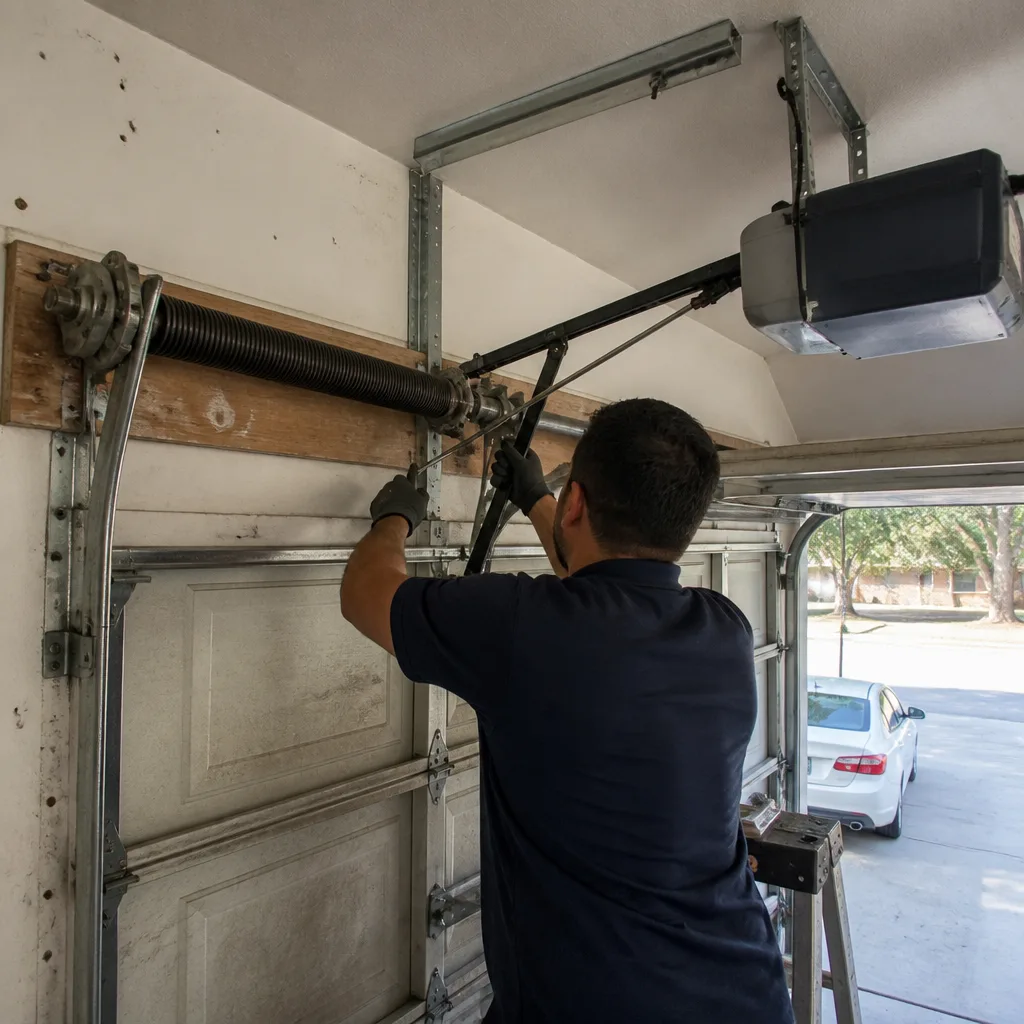 Before
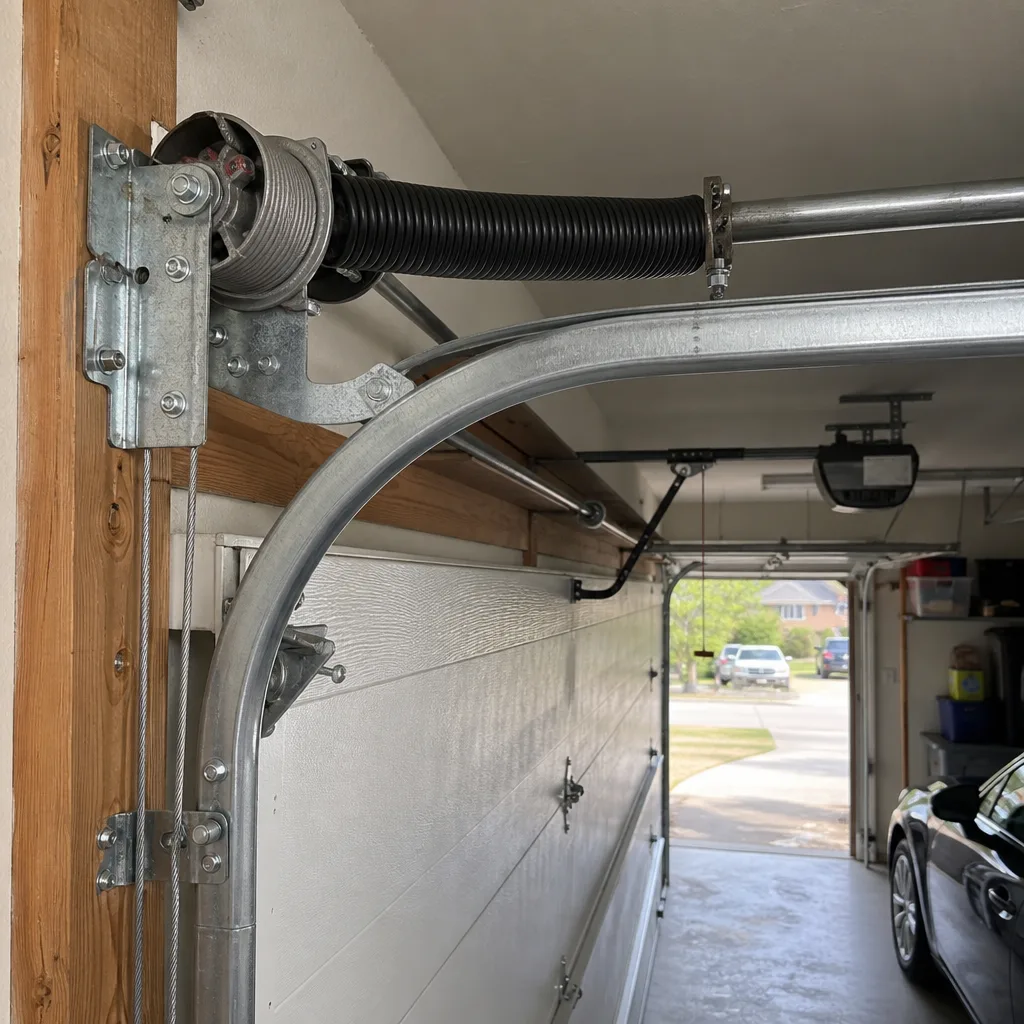 After
After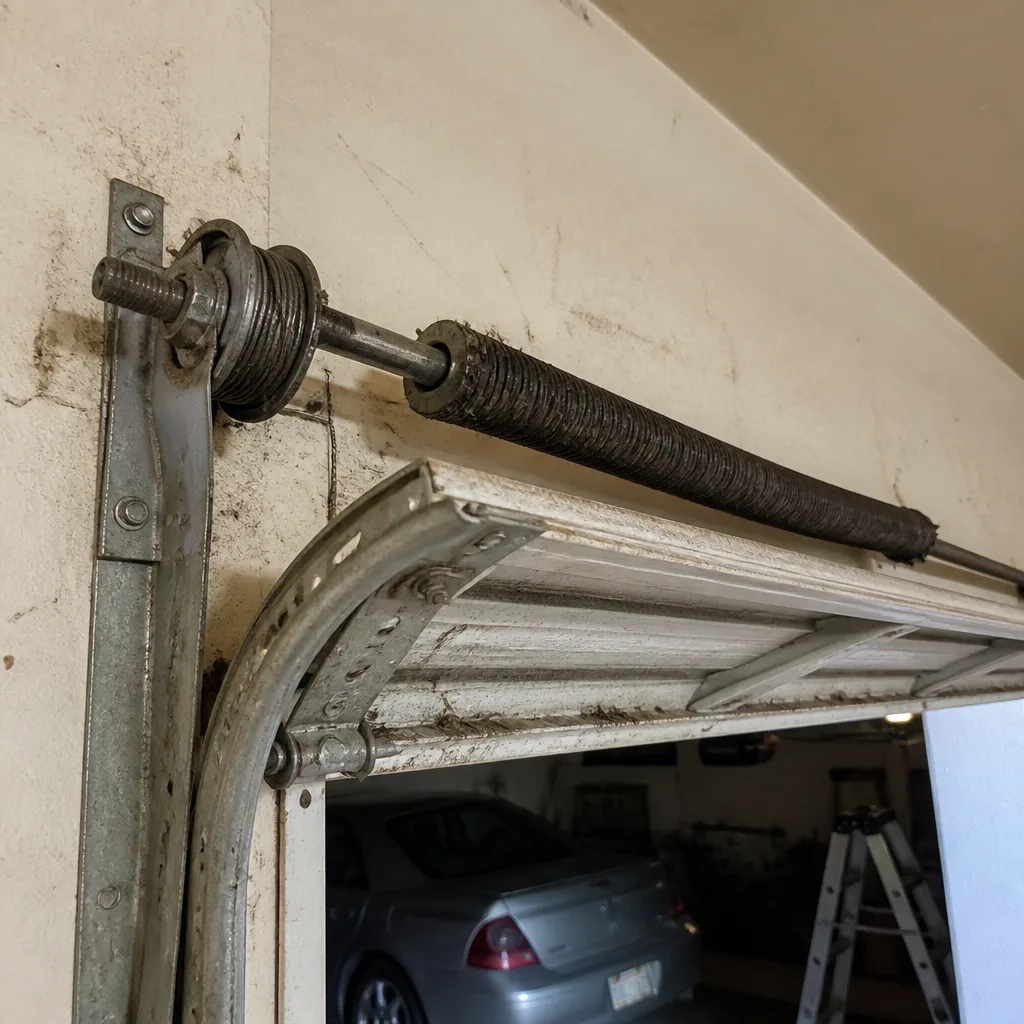 Before
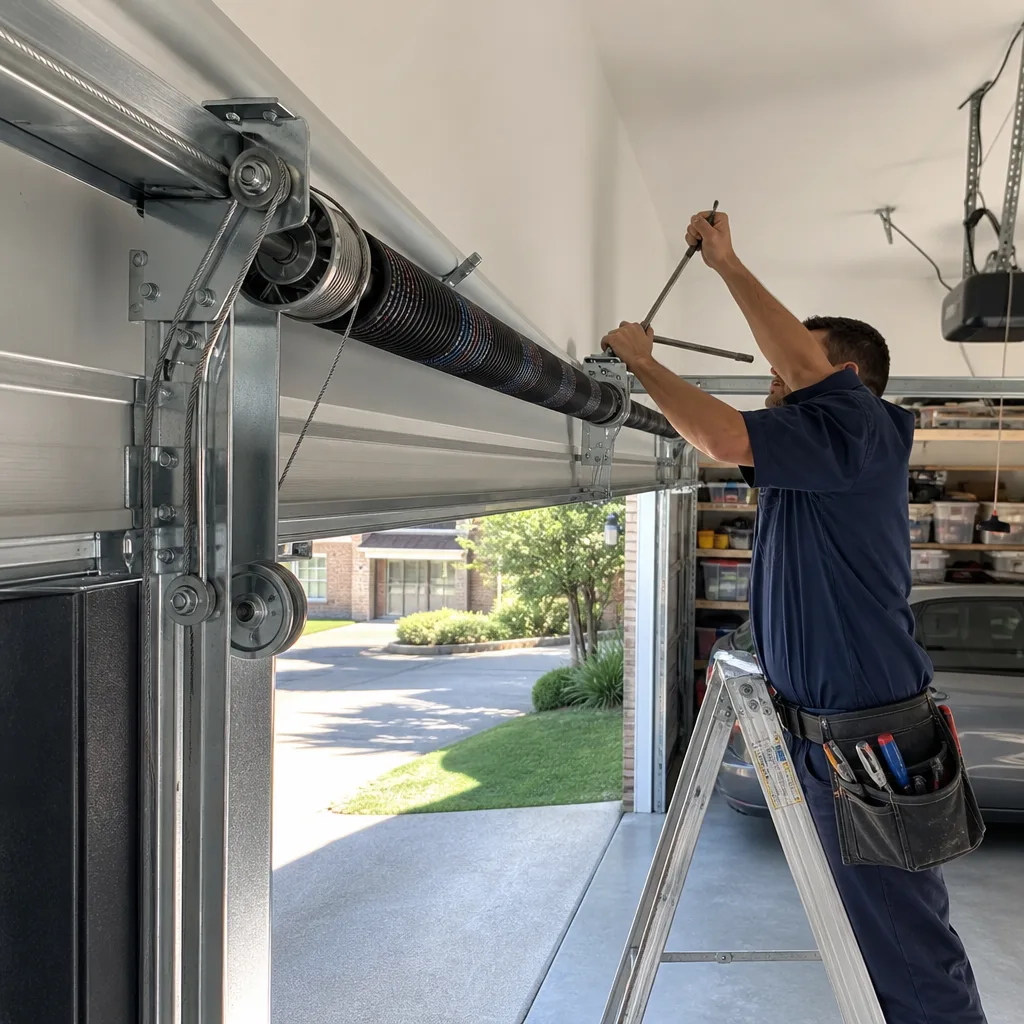 After
AfterGarage Door Warning Signs: A Grapevine Homeowner’s Reference Guide
A garage door that takes three seconds longer to close than it did last month isn’t just slow - it’s telling you the spring tension has dropped to a point where the opener motor is compensating, and the motor will fail before the spring does if you wait. In Grapevine, where summer heat pushes metal fatigue faster and winter cold snaps contract hardware overnight, these small timing shifts are the earliest signals in a diagnostic language most homeowners never learn to read. Our Complete Guide to Garage Door in Grapevine translates what your door is saying before it quits entirely.
Quick Answer
Most garage door failures announce themselves through specific sounds, movements, and timing changes days or weeks before breaking down completely. The critical warning signs include grinding or popping during operation, visible gaps in torsion springs, uneven door movement, delayed response from the opener, and mid-travel reversal on descent. A door that exhibits any of these symptoms needs professional inspection within the week; for guidance on selecting qualified help, see How to Hire a Garage Door Contractor in Grapevine: A Step-by-Step Guide.
Table of Contents
- What Different Sounds Mean: A Diagnostic Guide
- The 60-Second Balance Test Anyone Can Do
- Reading Torsion Springs: The Gap Pattern That Predicts Breakage
- Why Your Door Reverses Mid-Travel (And Why It’s Not the Sensors)
- Same-Week Service vs. Stop Using It Today: Four Clear Boundaries
- How Grapevine’s Climate and Building Patterns Accelerate Wear
- Opener-Specific Warning Signs Before Motor Failure
- Common Mistakes to Avoid
- When to Call a Professional
- Frequently Asked Questions
What Different Sounds Mean: A Diagnostic Guide
Every sound a garage door makes is produced by a specific mechanical event. Learning to match the sound to the cause lets you describe the problem accurately when you call, and it tells you whether you’re looking at routine wear or imminent failure.
Grinding during opening or closing. This is almost always metal-on-metal contact where lubrication has broken down or a roller has seized. In Grapevine homes built during the 1980s and 1990s construction boom, we see this frequently on steel rollers that have never been replaced. The grinding accelerates track wear and can oval the roller stems. If the grinding is rhythmic and matches door movement speed, it’s likely a single bad roller. If it’s constant, check the trolley and rail on the opener.
Popping or snapping sounds, especially in morning or evening. This is the sound of a torsion spring binding and releasing. Springs develop micro-fractures that catch and slip as they wind and unwind. Each pop means a strand has broken inside the coil. A single pop is a warning. Multiple pops in sequence mean the spring is shedding load-bearing material and will fail within days or weeks. We’ve replaced springs in Grapevine’s Silver Lake and Heritage neighborhoods where homeowners reported “a few pops over the last month” - the spring broke the following weekend.
High-pitched squealing or screeching. This typically comes from dry bearings in rollers or the torsion spring’s stationary cone rubbing against the center bracket. It’s less urgent than grinding or popping but indicates maintenance has been deferred long enough that friction is causing heat and accelerated wear. Squealing that stops when you apply spray lubricant confirms the diagnosis, though we recommend a proper tune-up rather than DIY lubrication - homeowners often spray the wrong components or use products that attract grit.
Scraping along the bottom or sides. The door is out of alignment with the opening, or the weatherstrip has detached and is dragging. In Grapevine, where expansive clay soils shift with moisture, door frames settle slightly over decades. A door that scraped last summer after heavy rains but cleared in fall is telling you your foundation moved, and the track alignment needs adjustment. Scraping that worsens progressively indicates loose track mounting hardware.
Rattling that varies with wind. Loose hardware - nuts, bolts, hinges, or opener rail supports. The door itself may be structurally sound, but the mounting system is degrading. This is common in homes near Grapevine Lake where sustained winds test every connection.
The 60-Second Balance Test Anyone Can Do
This test reveals spring health more accurately than visual inspection alone. It requires no tools and carries no risk if performed correctly.
- Close the door fully and disconnect the opener. For chain or belt drives, pull the red emergency release cord straight down and back toward the motor unit. For screw drives, follow the manufacturer’s release procedure.
- Lift the door manually from the bottom center using the handle. It should move smoothly with moderate effort, roughly equivalent to lifting 15-20 pounds.
- Raise the door to waist height and release it slowly. A properly balanced door will stay in place or drift less than six inches in either direction.
- Raise the door to full open and release. It should remain open without drifting down.
- Lower the door to three feet from the floor and release. It should stay put or descend very slowly.
What the results mean:
- Door rises on its own from waist height: Springs are over-tensioned. This strains cables and opener hardware.
- Door falls rapidly from any position: Springs have lost tension and are no longer carrying their share of the door’s weight. The opener is doing the work, and its motor and gears are absorbing damage every cycle.
- Door feels heavy to lift or stalls midway: One or both springs have failed or are near failure. Do not operate until serviced.
- Door hangs crooked during manual lift: Uneven spring tension or a failing cable on one side. This stresses the door panels and track system asymmetrically.
In our experience across Grapevine, doors that fail the balance test by falling more than twelve inches have springs within 500 cycles of breakage. At four cycles per day, that’s about four months - often less in summer heat.
Reading Torsion Springs: The Gap Pattern That Predicts Breakage
Torsion springs fail in predictable patterns. You can identify the final stage from the ground with a flashlight, without touching anything.
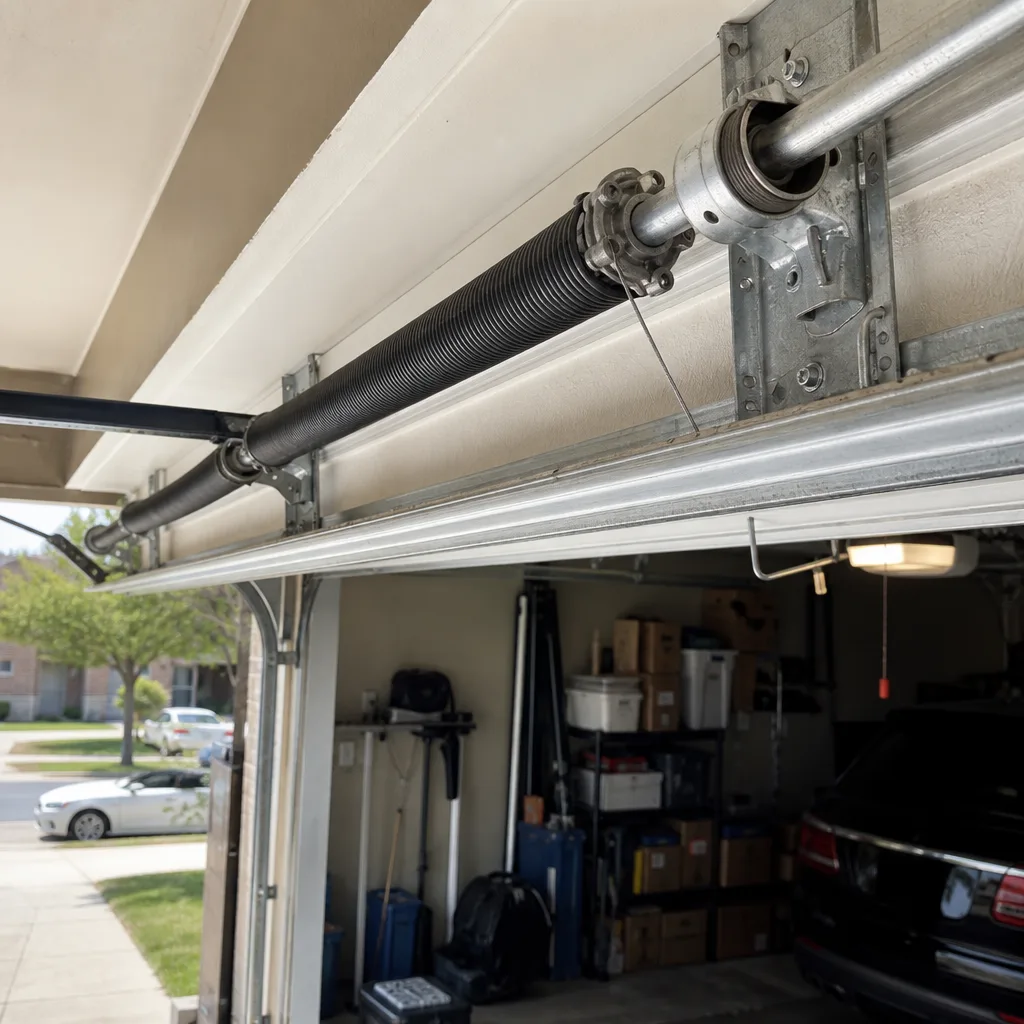
A healthy torsion spring is a continuous coil with coils touching or nearly touching along its length. As fatigue develops, the surface develops light rust or a dusty patina. This alone doesn’t indicate imminent failure - Grapevine’s humidity fluctuations produce surface oxidation that may never progress.
The critical warning sign is a visible gap in the coil pattern - a space where coils no longer sit tight against each other when the door is closed and the spring is wound. This gap indicates that a section of the spring has elongated permanently through metal fatigue. The spring is now longer than its original specification, which means it stores less energy per turn and carries less of the door’s weight.
Here’s what to look for specifically:
- Single gap, less than one coil width: Spring has lost approximately 15-20% of rated tension. Plan replacement within the month.
- Multiple gaps or a gap exceeding one coil width: Spring is within 100-300 cycles of breaking. Schedule service within the week; avoid unnecessary operation.
- Visible separation with rust staining at the gap: A crack has opened and is propagating. The spring could fail on the next cycle. Do not operate the door.
- Spring appears “stretched” with uniform spacing between all coils when door is down: This is a fully fatigued spring that has lost most of its lift capacity. The opener is carrying near-full door weight. Motor damage is likely already occurring.
Safety note: Torsion springs store massive mechanical energy. Never attempt to adjust, unwind, or replace them yourself. The winding cones can generate lethal force if mishandled. Our technicians at Garage Door Repair in Grapevine carry the specialized winding bars and torque-measuring tools required for safe service.
Why Your Door Reverses Mid-Travel (And Why It’s Not the Sensors)
When a garage door starts down, travels partway, then reverses to the open position, most homeowners and even some technicians assume the safety sensors are misaligned or dirty. In Grapevine homes with doors more than ten years old, the actual cause is different in roughly seven out of ten cases we diagnose.
Safety sensors - the photo eyes mounted six inches above the floor - create an invisible beam across the door opening. If anything breaks that beam, the door reverses immediately, usually within inches of travel. A door that reverses after descending two feet or more has already cleared the sensor zone. The sensors are working; something else is triggering the reversal logic.
The most common actual causes:
- Binding in the track system: A roller with a flat spot, a bent track section, or debris in the vertical-to-horizontal transition causes the door to encounter resistance. The opener’s force-sensing circuit interprets this as an obstruction and reverses the door. In Grapevine’s mature neighborhoods like Dove Creek and Timberline, where doors have cycled thousands of times, roller wear is the leading cause of mid-travel reversal.
- Door weight exceeding opener’s force setting: As springs weaken, the opener must pull or push harder to move the door. When the required force exceeds the opener’s internal threshold (designed to prevent crushing injuries), it reverses. The fix is spring replacement, not opener adjustment - raising the force setting masks the underlying problem and creates a safety hazard.
- Worn gears in the opener itself: Striped nylon gears in chain-drive openers slip under load, causing erratic movement that the control board interprets as resistance. The opener reverses to protect itself. Chamberlain and LiftMaster units from the 2000s and early 2010s are particularly susceptible after 15,000+ cycles.
- Intermittent electrical connection: A loose wire at the wall button or a failing logic board sends spurious reversal signals. This is harder to diagnose without testing equipment.
The diagnostic test is simple: disconnect the opener and operate the door manually. If it moves smoothly through the full travel, the door mechanism is sound and the problem lies in the opener or its interaction with an overweight door. If manual operation reveals binding or heavy spots, address the mechanical issue first.
We carry replacement gears, circuit boards, and complete opener units on our trucks, so most Garage Door Opener in Grapevine diagnoses result in same-visit resolution.
Same-Week Service vs. Stop Using It Today: Four Clear Boundaries
Not every warning sign demands the same response. These boundaries help you decide whether to schedule conveniently or call immediately.
Schedule same-week service - these four signs:
- Squealing or light grinding that started recently. The door is still functional. The noise indicates wear that will progress but hasn’t caused secondary damage yet. A tune-up or component replacement prevents escalation.
- Balance test shows slight drift (under 12 inches) from waist height. Springs are weakening but still functional. Replacement within the week prevents opener strain.
- Remote or wall button requires double-press occasionally. Usually a logic board or remote battery issue. The door operates safely; the inconvenience is minor but worsening.
- Weatherstrip dragging or minor scraping on one side. Alignment issue that causes wear but doesn’t risk sudden failure.
Stop using the door and call today - these three signs:
- Visible gap in torsion spring with rust staining, or multiple gaps. The spring is actively fracturing. Operation risks sudden breakage, which can damage the door, opener, or anything in the path of a falling panel.
- Door hangs crooked, or one cable is slack while the other is taut. Asymmetric loading risks cable derailment, which can twist the door in the tracks and cause panel damage or personal injury.
- Loud snap or pop followed by door that now feels very heavy or won’t stay open. A spring or cable has failed. Continued operation risks complete system damage and potential injury from a free-falling door.
The boundary between these categories is simple: if a component has already failed or is visibly fracturing, the door is unsafe. If wear is progressing but all components remain intact, you have days, not hours.
How Grapevine’s Climate and Building Patterns Accelerate Wear
Grapevine’s specific conditions create wear patterns that differ from national averages. Understanding them helps interpret warning signs in local context.
Thermal cycling intensity. North Texas temperature swings of 40°F within 24 hours are common in spring and fall. Steel springs expand and contract through these cycles, accelerating metal fatigue. A spring rated for 10,000 cycles in moderate climate may reach equivalent wear at 7,000-8,000 cycles here. This is why we see spring failures cluster in Grapevine homes after seven to ten years, where national averages suggest ten to fifteen.
Summer heat and opener electronics. Garage temperatures in Grapevine exceed 110°F routinely in July and August. Opener motors run hotter, capacitors degrade faster, and logic boards develop thermal faults. If your opener problems appear only in summer, heat is the trigger. We install thermal overload protectors and recommend adequate garage ventilation for units showing seasonal patterns.
Soil movement and frame settling. The expansive clay soils in Grapevine’s older neighborhoods, particularly near Grapevine Lake where water tables fluctuate, cause subtle foundation movement. This transfers to door frames, producing the gradual alignment shifts that cause scraping and binding. A door that worked perfectly for fifteen years then began scraping likely reflects soil movement, not door wear.
Wind exposure near the lake. Sustained winds of 20-30 mph with higher gusts test hardware integrity. Hinges loosen, track brackets fatigue, and opener rail supports work against lateral forces. Homes in exposed locations need more frequent hardware inspection.
Original construction quality variance. Grapevine’s building periods span from 1980s tract construction to current custom builds. Older homes often have lighter-gauge tracks and single-layer steel doors that fatigue faster than modern equivalents. A 1985 door showing the same symptoms as a 2015 door is closer to failure simply due to material specification.
For homeowners considering replacement, Garage Door Installation in Grapevine options now include insulated, wind-rated doors that address these specific climate factors.
Opener-Specific Warning Signs Before Motor Failure
Opener motors rarely fail without preliminary signals. These are the specific warnings that precede burnout or gear destruction, organized by drive type.
Chain-drive openers (Chamberlain, LiftMaster, Craftsman):
- Chain sag that exceeds one inch below the rail - indicates worn sprocket or improper tension
- Grinding from the motor head that lubrication doesn’t quiet - stripped nylon gears
- Motor runs but door doesn’t move - gear failure has already occurred
- Intermittent operation that improves after cooling - thermal overload from overload conditions
Belt-drive openers (newer Chamberlain, LiftMaster):
- Fraying or cracking in the rubber belt - material fatigue, often accelerated by heat
- Slipping during heavy-lift portions of travel - belt tension loss or stripped drive pulley
- Squealing from the motor head - belt tensioner bearing failure
Screw-drive openers (Genie, older models):
- Noisy operation that grease doesn’t resolve - worn carriage or drive screw threads
- Door stalls at consistent point in travel - stripped carriage threads or binding in screw
- Excessive vibration - loose screw coupler or failing motor mounts
The common thread across all types: if the motor works harder than it did previously, something has changed in the mechanical system. Motors are designed to operate within a specific load range. Sustained overload from weak springs, binding tracks, or door damage causes overheating, insulation breakdown, and eventual failure. Replacing the opener without fixing the underlying mechanical issue guarantees premature failure of the new unit.
We evaluate the complete system - door, springs, tracks, and opener - before recommending any Garage Door Opener in Grapevine replacement. The right fix is often less expensive than the obvious one.
Common Mistakes to Avoid
- Applying WD-40 to garage door components. WD-40 is a solvent and light penetrant, not a lubricant. It displaces the grease that actually protects bearings and rollers, then evaporates, leaving metal unprotected. Use lithium-based grease or silicone spray on rollers and hinges, never on tracks.
- Adjusting opener force settings to compensate for a heavy door. This masks spring failure and creates a crushing hazard. The force setting is a safety limit, not a performance control. If the door needs more force, the mechanical system needs service.
- Ignoring seasonal timing changes. A door that was “a little slow last winter too” is not normal - it’s a recurring symptom of springs losing tension in cold conditions. Each cycle of seasonal degradation reduces remaining spring life.
- DIY spring replacement after watching online tutorials. The tutorials rarely show the required winding bars, torque measurement, or the physical technique for controlled release. We’ve responded to emergency calls in Grapevine where homeowners sustained serious injuries attempting this. The savings are not worth the risk.
- Replacing the opener when the door is the problem. A new opener on a door with failed springs will fail prematurely and perform poorly. Always verify door balance and track condition before investing in opener replacement.
- Waiting for complete failure before calling. Emergency service costs more, parts availability is unpredictable, and you’re without a functioning door at the worst possible time. Scheduled maintenance and proactive replacement cost less and eliminate disruption.
- Hiring based on lowest bid without verifying licensing and insurance. In Grapevine, garage door contractors must carry general liability insurance and appropriate licensing. Uninsured work leaves you liable for injuries on your property. We carry full coverage and provide documentation on request.
When to Call a Professional
Call a qualified technician when warning signs progress beyond routine maintenance scope: any visible spring damage, door imbalance, mid-travel reversal, or sudden operational change. The risks of delayed service include opener destruction, door panel damage, and personal injury from falling components.
Mainspring Garage Door Co. offers free estimates in Grapevine. Our technicians arrive with springs, cables, rollers, and opener components already on the truck, so most jobs finish in a single visit. The price is stated before any work begins, and every completed job carries our 90-Day Done Right Promise in writing. Call (817) 668-7138 to schedule or discuss what you’re observing.
Frequently Asked Questions
Standard torsion spring replacement in Grapevine typically runs $180-$340 for a single spring and $280-$480 for a dual-spring system, depending on door size and spring specification. We state the exact price before starting work, and our $50 Off Any Repair Over $250 offer applies to most spring jobs. Call (817) 668-7138 for a firm quote - estimates are free.
Yes, and this is the most dangerous failure mode. A broken spring with the door open cannot hold the door’s weight; the door may crash down unless the opener or safety cables catch it. If you hear a loud bang from the garage while the door is open, do not walk under the door or attempt to close it manually. Call for professional service immediately.
Shaking indicates uneven force distribution, most commonly from a failing spring on one side, worn rollers catching in the track, or loose hinge bolts. In Grapevine homes with original 1980s-1990s hardware, we find loose track mounting combined with roller wear causes most shaking. The condition worsens progressively and will damage door panels if not addressed.
Every 12-18 months for standard steel doors in attached garages; every 10-12 months for doors facing direct sun exposure, near the lake with wind exposure, or with heavy daily use. Our $89 Seasonal Garage Door Care for Grapevine: Year-Round Homeowner’s Guide tune-up includes balance testing, hardware inspection, lubrication, and safety sensor verification. The senior and veteran 5% discount applies.
No. Our price is quoted and agreed before any work starts. If we discover additional issues during inspection, we explain them and provide a revised quote for your approval before proceeding. There are no surprises on the bill. This is our standard practice, not a special offer.
Yes. Our trucks are stocked with torsion and extension springs in common sizes, cables, rollers, hinges, weatherstrip, and opener components for major brands including Chamberlain, Genie, and LiftMaster. Most repairs in Grapevine are completed in a single visit without waiting for parts.
The Bottom Line
Your garage door speaks before it fails. The three-second delay, the morning pop, the slight lean when halfway open - these are not quirks to tolerate but signals to interpret. In Grapevine’s demanding climate, small symptoms accelerate faster than in milder regions, and the cost of waiting is always higher than the cost of timely service. For more guides & resources, learn the diagnostic language, perform the balance test seasonally, and respond to the boundaries that separate convenient scheduling from urgent action. A door that is maintained before failure never traps a car, surprises you with a bill, or leaves you waiting.
Written by Carl Dutton, Owner at Mainspring Garage Door Co., serving Grapevine since 2016.