
Last updated September 10, 2026
Full 25-point door and opener safety check with every visit - springs, cables, rollers, tracks, and your LiftMaster or Chamberlain opener included
You get a price before we start. It does not change when the truck arrives.
 Before
 After
After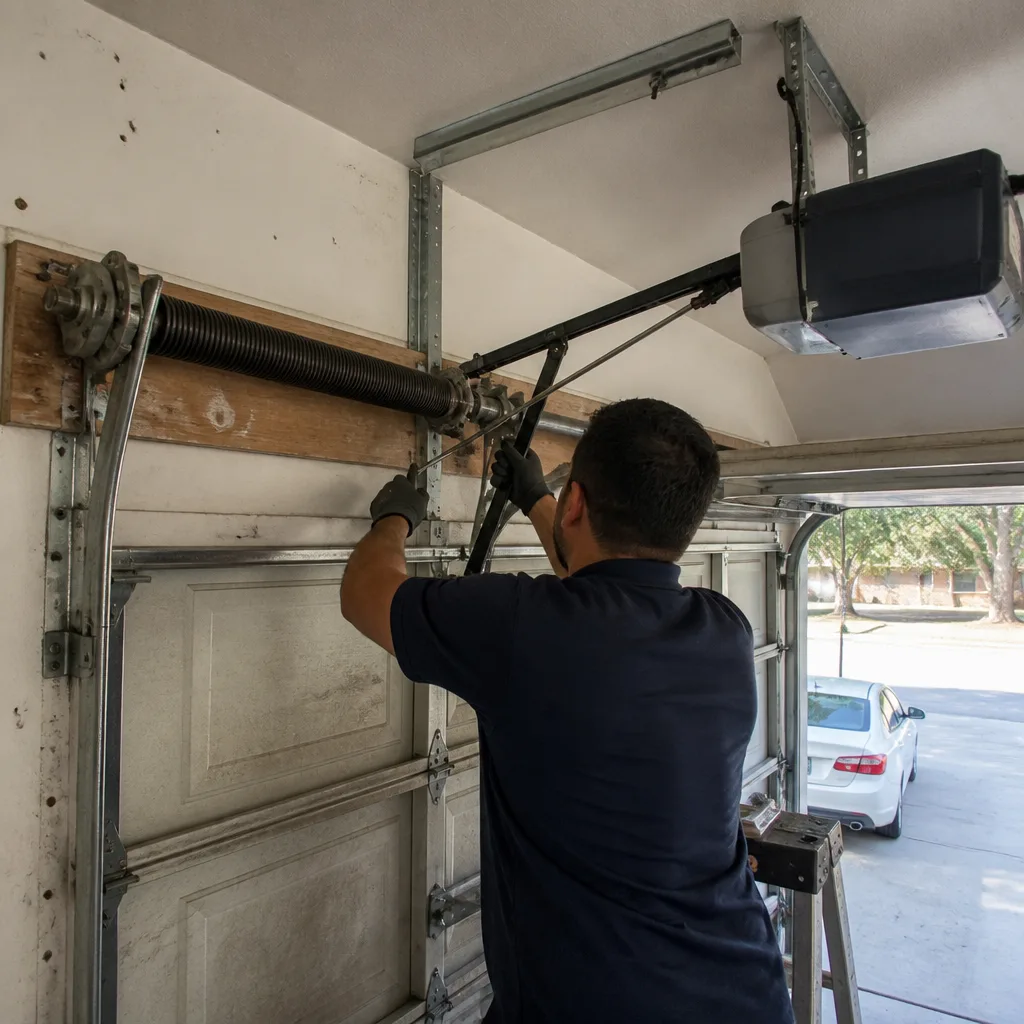 Before
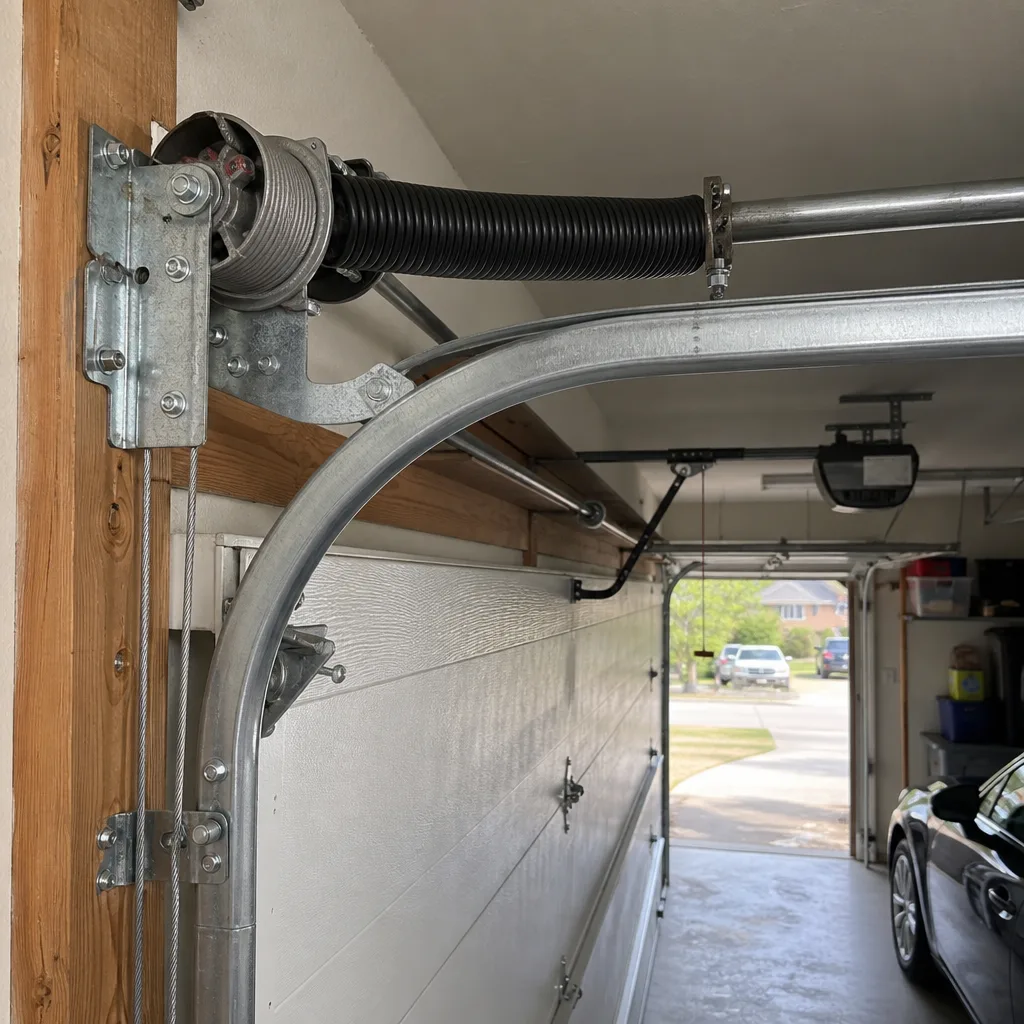 After
After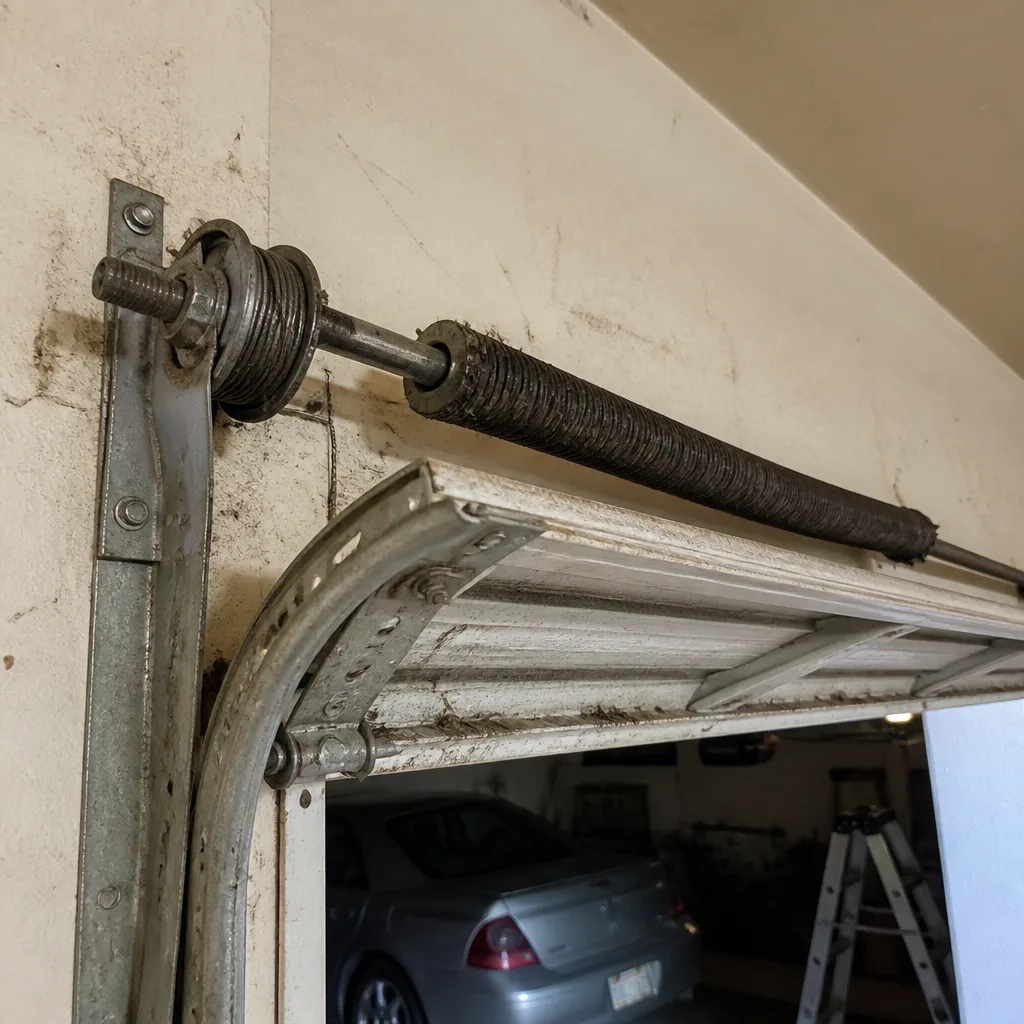 Before
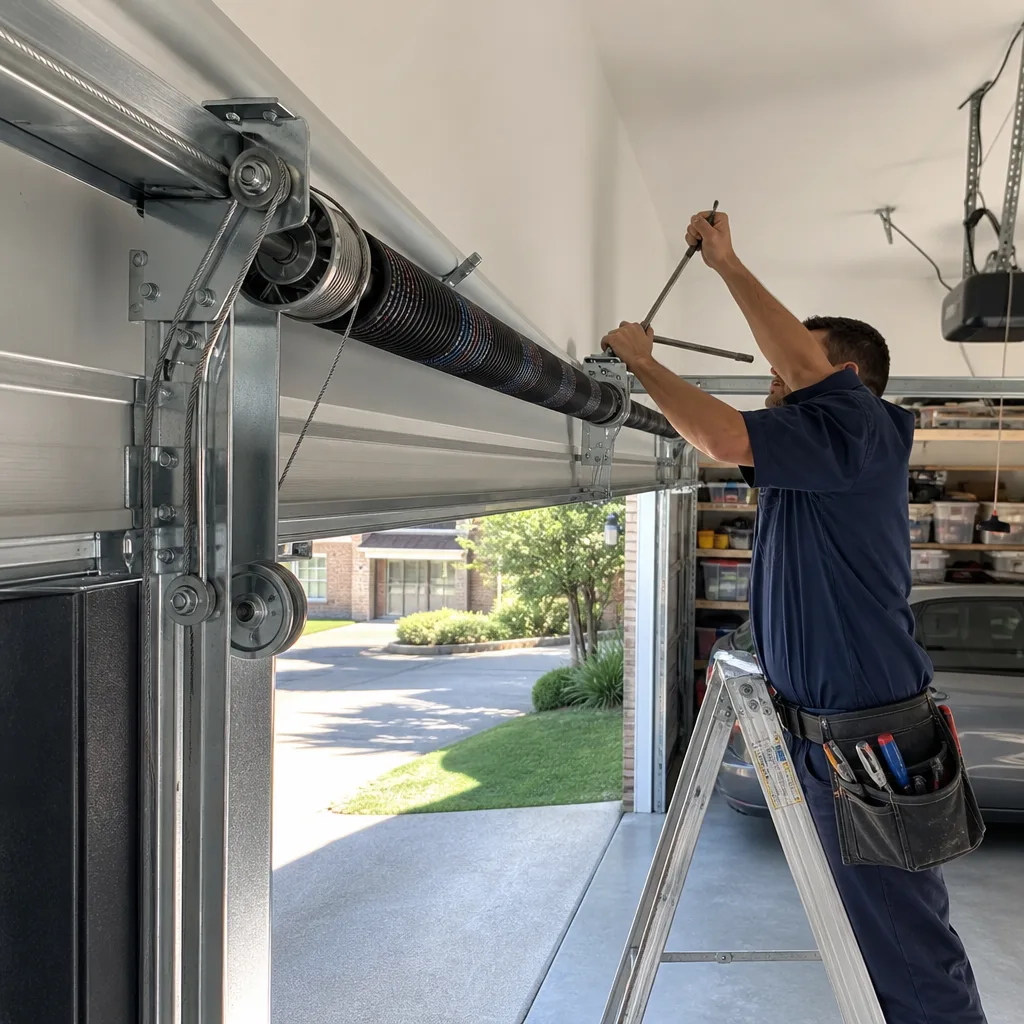 After
AfterSeasonal Garage Door Care for Grapevine: Year-Round Homeowner’s Guide
In Grapevine, the month that destroys the most garage door springs isn’t January - it’s October, when overnight temperatures drop 40 degrees after a 95-degree afternoon and metal contracts faster than the spring tension can track. Most maintenance guides written for four-season climates miss this entirely, leaving Grapevine homeowners with a schedule that doesn’t match what their door actually faces. For The Complete Guide to Garage Door in Grapevine and more localized resources, see our blog. This guide replaces that generic calendar with a three-stress cycle built for North Texas: brutal summer heat, spring hail season, and brief but sharp cold snaps. You’ll learn when to inspect what, how local conditions wear specific components, and which tasks are worth doing yourself versus calling in a trained technician.
Quick Answer
Grapevine garage doors need maintenance timed to three local stress cycles, not four seasons: pre-hail inspection in March, heat-damage checks in July, cold-snap preparation in October, and freeze-thaw seal care in December. Most homeowners can handle visual inspection, track cleaning, and weatherstripping checks, but spring tension adjustments and cable inspections should be left to professionals due to serious injury risk. Not sure where you stand? Read our DIY vs Professional Garage Door: The Grapevine Homeowner’s Decision Guide.
Table of Contents
- Why Grapevine’s Climate Breaks the Four-Season Model
- March: The Pre-Hail Inspection Checklist
- July: When Heat Warps What You Can’t See
- October: The Hidden Danger of Rapid Temperature Swings
- December: Preparing for Grapevine’s Brief Freeze Window
- DFW Limestone and Cedar Elm: The Grit That Wears Components
- West-Facing Homes in Grapevine: Why They Need Twice-Yearly Track Checks
- What You Can Check Yourself vs. What Requires a Technician
Why Grapevine’s Climate Breaks the Four-Season Model
Standard maintenance guides assume a temperate climate with gradual transitions. Grapevine doesn’t operate that way. Sitting at the edge of the Cross Timbers ecological region and fully exposed to southern plains weather patterns, this city experiences three distinct stress events that each attack garage door components differently.
Summer heat stress (May through September): Attic temperatures above 140 degrees radiate through garage ceilings. Metal tracks expand. Torsion springs lose temper slowly with each heat cycle. Vinyl weatherstripping softens and deforms. Opener motors work harder against thermally expanded components.
Hail and wind stress (March through June): Grapevine sits in the southern extent of Tornado Alley. The National Weather Service records an average of 3-4 severe hail events annually within Tarrant County. Even quarter-sized hail leaves panel dents that compromise door seal. Wind-driven debris strikes the bottom section where corrosion already weakens the steel.
Cold-snap stress (October through February): Grapevine’s winter isn’t long, but it’s sharp. The January 2024 freeze dropped temperatures from 72 degrees to 8 degrees in 18 hours. That rapid contraction separates lubricant films, cracks aged rubber seals, and overloads springs that have already lost flexibility from summer heat cycles.
The maintenance calendar below addresses each stress window with specific timing, not generic “spring and fall” advice.
March: The Pre-Hail Inspection Checklist
March is the last calm month before Grapevine’s severe weather season begins. By mid-April, the jet stream pattern shifts and hail-producing supercells become regular afternoon events. This is your window to identify vulnerabilities that a storm will exploit.
Step 1: Panel seal inspection
Run your hand along the inside face of each panel section, feeling for gaps where the interlocking tongue-and-groove seal has compressed or torn. On steel doors common in Grapevine’s 1980s and 1990s subdivisions, this seal is a flexible vinyl insert that hardens after 8-10 years of heat exposure. A compromised seal lets wind-driven rain penetrate during storms, saturating the interior panel core and adding weight that strains the opener.
Step 2: Hail damage assessment from prior years
Examine panel faces in raking light - early morning or late afternoon, when shadows reveal subtle dents. Grapevine’s 2019 and 2021 hail seasons were particularly severe, and many homeowners carry unrepaired damage. Distinguish between:
- Cosmetic dents only: Shallow, no paint cracking, no panel face deformation. These do not affect function.
- Seal-compromising dents: Deep enough to crack paint, deform the panel edge, or create a depression that pools water. These accelerate rust and weaken the panel structure.
- Structural dents: Any dent that prevents the door from seating flush in the closed position. These create gaps for wind, water, and pest entry.
Step 3: Hardware torque check
Vibration from wind gusts loosens roller brackets and hinge bolts over time. With the door closed, inspect each hinge and bracket with a flashlight. Look for bolt heads that have backed out, washer deformation, or metal fatigue at bracket bends. Do not tighten torsion spring hardware - the bolts under spring tension require specialized tools and training.
Step 4: Opener force setting verification
After any hardware adjustment, test the opener’s safety reverse. Place a 2×4 flat on the floor centered under the door path. The door should reverse within 2 seconds of contact. If it doesn’t, the force setting is too high - a common condition after homeowners increase it to compensate for worn springs. This is a safety hazard, not a convenience issue.
Our Garage Door Repair in Grapevine service includes full pre-storm inspection and adjustment. We carry replacement panels for Clopay, Amarr, and Wayne Dalton doors on our trucks, so most hail-damage repairs are completed in a single visit.
July: When Heat Warps What You Can’t See
By July, Grapevine has accumulated 60+ days above 90 degrees. The thermal load on garage door components peaks this month, and damage that began in May becomes visible now.
Track alignment check
Steel vertical tracks expand approximately 1/16 inch per 10 feet of track for every 50 degrees of temperature rise. A track installed at 50 degrees in March is running 3/32 inch wider at the top by July afternoon. This doesn’t sound like much, but roller wheels are manufactured to 1/32 inch clearance. The accumulated expansion binds rollers, increases opener motor current draw, and eventually pops rollers from the track.
Inspect the track-to-jamb bracket spacing at the top of the vertical track. Look for:
- Bracket bolts that have pulled through the jamb from repeated expansion-contraction cycles
- Track mounting holes that have elongated into slots
- Roller wheels with flattened edges or bearing race discoloration from running under side load
Spring temper loss
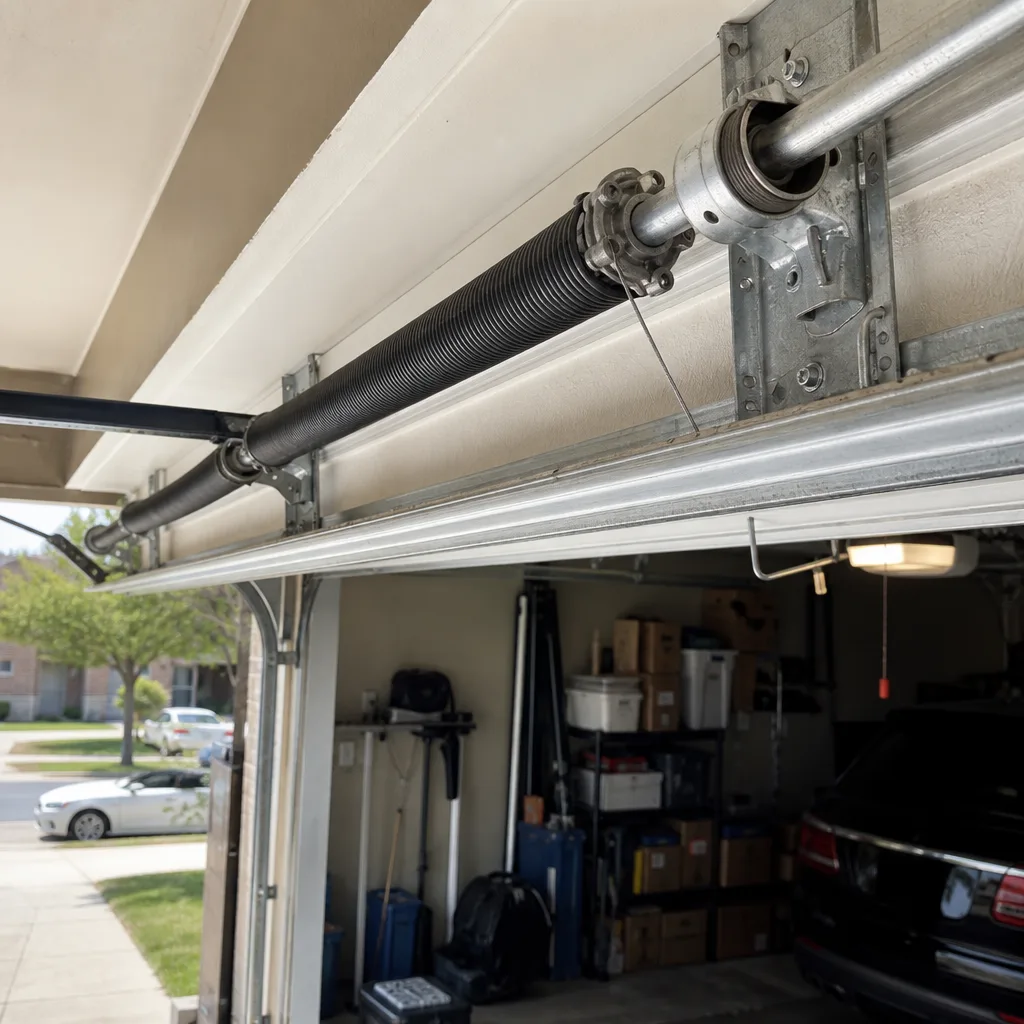
Torsion springs are heat-treated to a specific hardness during manufacture. Each heat cycle above 120 degrees ambient - routine in Grapevine garages - slightly relaxes that temper. A spring rated for 15,000 cycles may deliver only 11,000-12,000 in this climate. The door feels heavier. The opener strains. Homeowners compensate by increasing force settings, which accelerates wear on the entire system.
There’s no DIY test for temper loss. But these symptoms indicate professional inspection: the door requires manual assistance to open, the opener hums before moving the door, or the door drifts downward more than 6 inches from fully open.
Weatherstripping condition
Vinyl bottom seals soften in July heat, then take a compression set against the concrete floor. By August, many seals no longer rebound to full height. The gap allows conditioned air escape, but more critically, it admits the limestone dust and cedar elm pollen that accelerate roller and hinge wear. Replace seals that have lost more than 30% of original thickness or show permanent deformation lines.
Our $89 Seasonal Tune-Up, available throughout Grapevine, includes spring tension measurement, track alignment verification, and weatherstripping assessment. For full pricing context, see our Garage Door Cost Breakdown: The Grapevine Homeowner’s Reference for 2026. We state the flat price before any work begins.
October: The Hidden Danger of Rapid Temperature Swings
October is Grapevine’s most dangerous month for garage door springs, and most homeowners never see it coming.
The mechanism is straightforward. After months of 95+ degree afternoons, torsion springs have thermally expanded to their maximum working length. The first strong cold front - typically arriving in the second or third week of October - drops temperatures 30-40 degrees overnight. The spring steel contracts rapidly. The tension doesn’t reduce proportionally because the spring is still wound to lift the door’s weight. The resulting stress concentration at the spring’s stationary cone often exceeds the material’s reduced toughness from summer temper loss.
We see more spring failures in Grapevine during October and early November than in December through February combined. The spring doesn’t care that winter hasn’t officially arrived.
Pre-cold-snap inspection protocol:
- Listen to the door cycle. A spring approaching failure produces a distinct creaking or pinging during the first 12 inches of travel. This is the coils binding against each other as the spring loses its uniform pitch from temper relaxation.
- Check cable condition. Lift cables run from the bottom bracket to the drum at the spring shaft end. As springs weaken, cables carry unbalanced loads and fray at the drum wrap point. Look for individual wire breaks projecting from the cable - “meat hooks” in trade terminology. Even one visible wire break indicates replacement need.
- Test door balance with the opener disconnected. Pull the red emergency release handle. Lift the door manually to waist height. A properly balanced door stays in position. A door that falls or rises indicates spring tension imbalance. Do not attempt to adjust - the stored energy in a torsion spring can cause severe injury or death.
- Inspect end cones and winding collars. Look for rust streaks, cracks in the cast iron, or evidence of previous slippage. These are failure precursors visible to the eye.
Safety note: Torsion springs are under hundreds of pounds of torque. The winding cones are not designed for wrench purchase by untrained hands. Every year, emergency rooms in the DFW area treat homeowners for lacerations, fractures, and eye injuries from spring components. We do not recommend any DIY work on torsion spring systems.
If your door shows any of these symptoms, Mainspring Garage Door Co. home page lists our full service range, or call directly for same-day assessment in Grapevine.
December: Preparing for Grapevine’s Brief Freeze Window
Grapevine’s freeze events are short - typically 2-4 consecutive nights - but they arrive with little warning and temperatures low enough to damage components that were adequate in milder conditions.
Threshold seal preparation without summer damage
The common advice to apply silicone spray or petroleum-based lubricants to rubber seals before winter is wrong for Grapevine. These products provide temporary flexibility in cold conditions, but they chemically degrade the rubber compound over months of summer heat exposure. By the following July, treated seals show surface cracking and accelerated compression set.
The correct approach for Grapevine’s climate:
- Clean the seal thoroughly with mild detergent and water in late November, removing accumulated limestone grit
- Allow complete drying - trapped moisture freezes and expands, splitting the seal from inside
- Apply a thin film of glycerin-based rubber conditioner, which does not contain petroleum solvents
- Verify the seal contacts the floor uniformly across the full door width; adjust retainer channel position if gaps exist
Opener battery and electronics
Backup batteries in LiftMaster and Chamberlain openers lose 50% of cold-crank capacity at 20 degrees. If your opener has battery backup (required on new installations since 2019), test it by unplugging the opener and operating the door. Replace batteries that show voltage below 12.4V under load. The battery itself is accessible without tools on most models - a safe homeowner task.
Track lubrication timing
Apply lithium-based grease to roller bearings and hinge pins in early December, not October. October application attracts dust through the remaining warm weeks, creating abrasive paste by January. December application places lubricant immediately before the freeze window when metal-on-metal contact is most likely.
Apply sparingly. Excess lubricant drips onto the door face, collects dust, and migrates to the photo-eye sensors, causing false obstruction readings.
DFW Limestone and Cedar Elm: The Grit That Wears Components
Grapevine’s location on the eastern edge of the Grand Prairie limestone formation creates a specific maintenance challenge that coastal or northern guides never address.
Caliche dust - calcium carbonate particles from limestone erosion - is fine enough to penetrate standard garage door seals and abrasive enough to accelerate wear in roller bearings and hinge pins. Cedar elm pollen, dominant in late August and September, adds an organic component that compacts with moisture into a paste.
The combined effect: roller bearings that should last 10-15 years in cleaner environments need replacement in 7-9 years in Grapevine. Hinge pins develop oval wear patterns that cause door binding. The bottom seal retainer channel fills with compacted grit, preventing proper seal compression.
Cleaning interval that actually extends life:
Monthly during March-June (pollen and dust peak), quarterly July-February. Use a vacuum with brush attachment on tracks and retainer channels. Wipe roller stems and hinge pins with a clean cloth - no solvent needed, just removal of accumulated film. For heavy accumulation, a nylon brush and warm water with mild detergent, followed by thorough drying.
Never use a pressure washer on garage door components. The water forces grit deeper into bearings and displaces factory lubrication from sealed roller units.
In neighborhoods near Grapevine Lake - Silver Lake, Oak Grove, and the lake-adjacent sections of Dove Road - the limestone dust concentration runs higher due to exposed construction cuts and boat-trailer traffic on unpaved access roads. Homeowners in these areas should inspect monthly year-round, not just during pollen season.
West-Facing Homes in Grapevine: Why They Need Twice-Yearly Track Checks
Solar thermal load is not evenly distributed. A west-facing garage door in Grapevine receives direct afternoon sun from 2 PM to sunset, with surface temperatures 25-35 degrees above ambient. We’ve measured track surface temperatures of 165 degrees on July afternoons in the Silver Lake and Timberline subdivisions.
This differential expansion creates a specific failure mode: the sun-exposed track expands while the shaded track does not. The door runs canted, loading the rollers unevenly and twisting the horizontal track supports. Over 3-5 years, this produces:
- Track mounting bracket fatigue at the sun-side top fixture
- Horizontal track sag on the exposed side, visible as a downward bow when viewed from the end
- Door seal gap on the cool side, admitting dust and insects
- Opener rail misalignment, causing trolley binding and premature drive gear wear
Inspection protocol for west-facing doors:
- Inspect in July, during peak thermal differential - the distortion is visible then
- Inspect again in January, when contraction reveals permanent set in brackets and supports
- Check track vertical with a 4-foot level; acceptable variance is 1/4 inch per 10 feet
- Verify horizontal track is level or slopes 1/4 inch back toward the header - never forward
- Confirm opener rail is parallel to the header within 1/8 inch across its full width
Correcting track alignment requires loosening multiple bracket bolts simultaneously and re-torquing in sequence - a procedure that risks door collapse if done incorrectly. We recommend professional adjustment for any variance exceeding the tolerances above.
Our Garage Door Installation in Grapevine service includes proper track orientation and sun-shield recommendations for new doors on west-facing garages.
What You Can Check Yourself vs. What Requires a Technician
We believe in homeowners understanding their equipment. We also believe in being straight about what’s safe and what isn’t. Find more guides & resources on our blog.
Safe homeowner tasks:
- Visual inspection of panels, seals, and hardware for obvious damage or looseness
- Photo-eye alignment and cleaning - wipe lenses with soft cloth, verify both LEDs are solid (not blinking)
- Emergency release function test - pull red handle, lift door manually, re-engage trolley
- Opener battery backup test (on equipped models)
- Remote battery replacement and reprogramming
- Weatherstripping cleaning and minor adjustment
Tasks requiring professional training and tools:
- Any work on torsion or extension spring systems - tension measurement, adjustment, or replacement
- Cable replacement or drum adjustment
- Track realignment, especially on doors with direct-drive or jackshaft openers
- Opener force limit calibration after any spring or hardware change
- Panel replacement on sectional doors with integrated struts or reinforcement
The distinction is injury potential, not complexity. A homeowner with patience and a good flashlight can learn to identify spring fatigue. But releasing and rewinding torsion spring torque requires winding bars inserted into a component under lethal tension. A slip or miscalculation causes immediate, serious injury. We’ve responded to calls where a homeowner’s attempted spring repair damaged the door, the opener, and required emergency medical attention. The flat price we quote before starting work is always less than that cost.
For opener-specific issues, our Garage Door Opener in Grapevine page covers troubleshooting and replacement options for all major brands.
Common Mistakes to Avoid
- Applying WD-40 to tracks or rollers. WD-40 is a solvent and water displacer, not a lubricant. It strips existing grease and attracts dust, creating abrasive slurry. Use lithium-based grease on metal-to-metal contact points.
- Ignoring a slow-opening door. In Grapevine heat, a door that takes 2-3 extra seconds to open usually indicates spring temper loss, not opener weakness. Running the opener harder burns out the motor and strips nylon drive gears.
- Sealing the garage completely for “energy efficiency.” Garages need ventilation to shed heat. Sealing soffit vents or installing vapor barriers without addressing the heat source traps moisture and accelerates metal corrosion.
- Pressure-washing the door face annually. The force drives water behind panel seams, saturating insulation and promoting internal rust. It also strips factory finish protection. Hand-wash with mild detergent and soft brush.
- Waiting for a spring to break completely. A fatigued spring that still functions is unpredictable. It may break at 6 AM when you’re leaving for DFW Airport, or at 10 PM during a freeze. Schedule replacement at first symptoms - creaking, visible coil gap variation, or door heaviness.
- Using generic replacement rollers from hardware stores. The 2-inch nylon rollers commonly stocked locally have 7-ball bearings and plastic races rated for 5,000 cycles. OEM-spec 10-ball steel-race rollers last 3x longer and run quieter. The price difference is $3-4 per roller.
- Skipping inspection after any hail event, even “minor” ones. Grapevine’s 2021 hail season produced damage that wasn’t visible from the ground but compromised panel interlock seals, leading to water infiltration and internal corrosion discovered 18 months later.
When to Call a Professional
Call a technician when you observe any of the following: the door makes new noises (grinding, popping, or squealing that persists after cleaning), visible cable fraying or rust streaks, the door reverses unexpectedly or fails to reverse on obstruction test, panel damage from impact or hail, or any spring-related symptom. These conditions indicate potential safety hazards or progressive damage that will cost more to address later.
We answer our phones with a live person, 24/7, including nights, weekends, and holidays. No phone trees, no voicemail, no after-hours answering service. Our technicians arrive with springs, cables, rollers, and opener components for all major brands already on the truck. Most jobs are completed in a single visit. Every repair is covered by our 90-Day Done Right Promise: if it’s not right, we return at no charge, in writing, with no dispute process.
Mainspring Garage Door Co. offers free estimates in Grapevine. Call (817) 668-7138 to schedule inspection, repair, or our $89 Seasonal Tune-Up. Seniors and veterans receive a permanent 5% discount. If you have a written estimate from another company, we’ll provide a free second opinion.
Frequently Asked Questions
Professional seasonal maintenance in Grapevine typically runs $89-$150 for a standard tune-up including spring tension check, hardware torque verification, track alignment, safety system test, and weatherstripping inspection. Our Seasonal Tune-Up is $89, with the price stated upfront before any work begins. Repairs identified during inspection are quoted separately and approved before proceeding. Call (817) 668-7138 for exact pricing on your door configuration.
For most Grapevine homes, once yearly is adequate. West-facing garages, lake-adjacent properties with higher limestone dust exposure, and doors with original springs over 8 years old benefit from twice-yearly service - March before hail season and October before cold snaps. Commercial doors with higher cycle counts need quarterly inspection.
We don’t recommend it. Torsion springs are under lethal tension, and applying lubricant requires proximity to the winding cones and coils. If lubrication is needed, our technicians apply it during service calls using proper barricade and tool protocols. The homeowner tasks that actually help are track cleaning, photo-eye maintenance, and weatherstripping care - these reduce the load on springs without exposing you to danger.
Thermal expansion of steel tracks and humidity swelling of wooden door sections (on older doors) are the usual causes. In Grapevine’s climate, track expansion from 140+ degree garage temperatures is more common than humidity effects. The binding typically occurs at the top of the vertical track where expansion is greatest. Track alignment adjustment resolves it - a professional task due to the need to support the door during adjustment.
No. We state the flat price before any work begins. If inspection reveals additional issues, we quote those separately and require your approval before proceeding. You’ll never see a bill larger than the price you agreed to. This is our standard practice on every job, documented in writing.
Standard torsion springs rated for 10,000 cycles typically deliver 7-9 years in Grapevine due to heat temper loss and rapid temperature swing stress. High-cycle springs rated for 25,000-30,000 cycles last 15-20 years and are worth the additional cost for homeowners planning long-term residence. We measure remaining cycle life during tune-ups and provide replacement timing recommendations.
We stock springs, cables, rollers, hinges, and opener components for LiftMaster, Chamberlain, Genie, Clopay, Amarr, Wayne Dalton, Craftsman, and Raynor. For panel replacement or specialty hardware, we verify compatibility and source from regional distribution, typically 24-48 hours. Most repair calls are completed in a single visit.
The Bottom Line
Grapevine garage doors face a three-stress cycle that generic maintenance schedules don’t address. Time your care to March pre-hail inspection, July heat-damage assessment, October cold-snap preparation, and December freeze-thaw seal protection. Handle the safe homeowner tasks - visual inspection, cleaning, and photo-eye maintenance - but respect the injury potential of spring and cable work. The limestone dust and cedar elm pollen unique to this region demand more frequent cleaning than national guides suggest. West-facing garages need twice-yearly professional track checks. Most importantly, address symptoms early: a slow door, new noise, or visible wear are warnings, not inconveniences. The cost of scheduled maintenance is always less than emergency repair or injury.
Written by Carl Dutton, Owner at Mainspring Garage Door Co., serving Grapevine since 2016.