
Last updated September 10, 2026
Full 25-point door and opener safety check with every visit - springs, cables, rollers, tracks, and your LiftMaster or Chamberlain opener included
You get a price before we start. It does not change when the truck arrives.
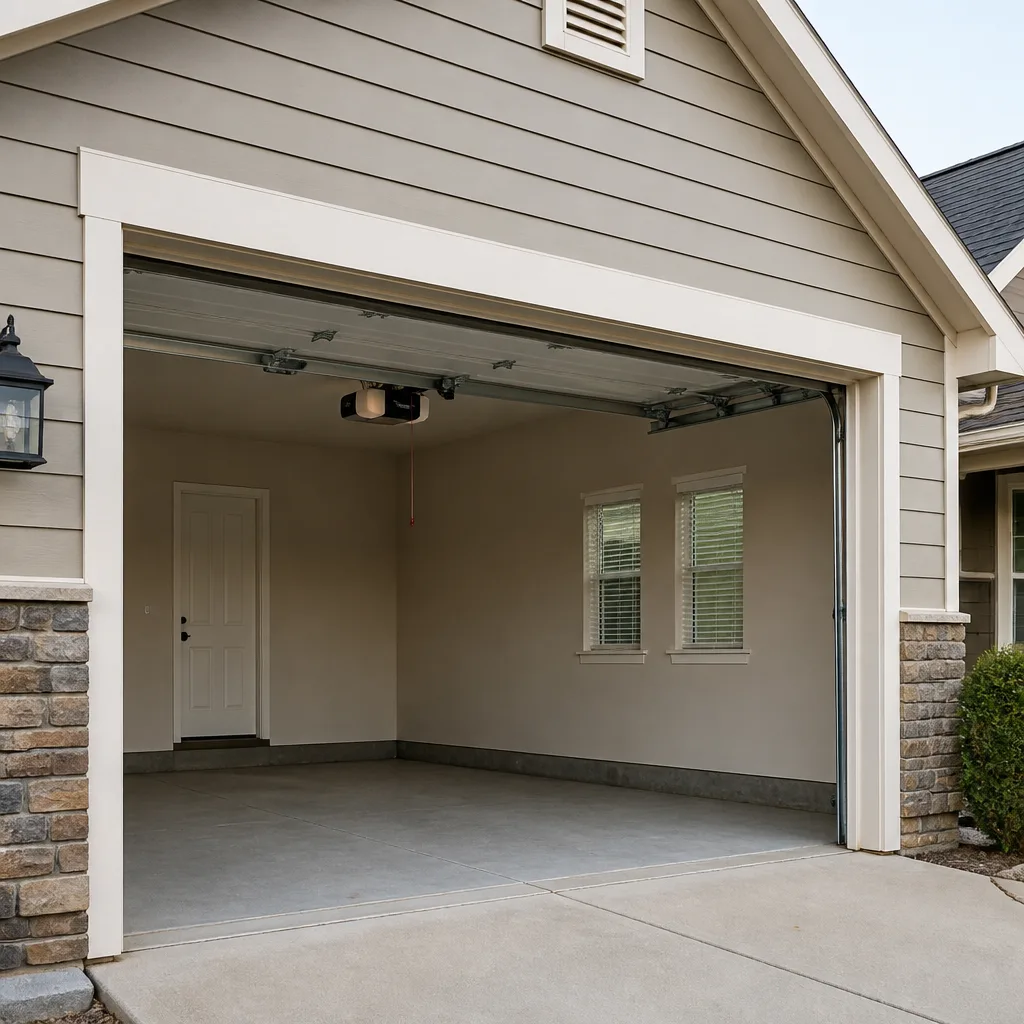
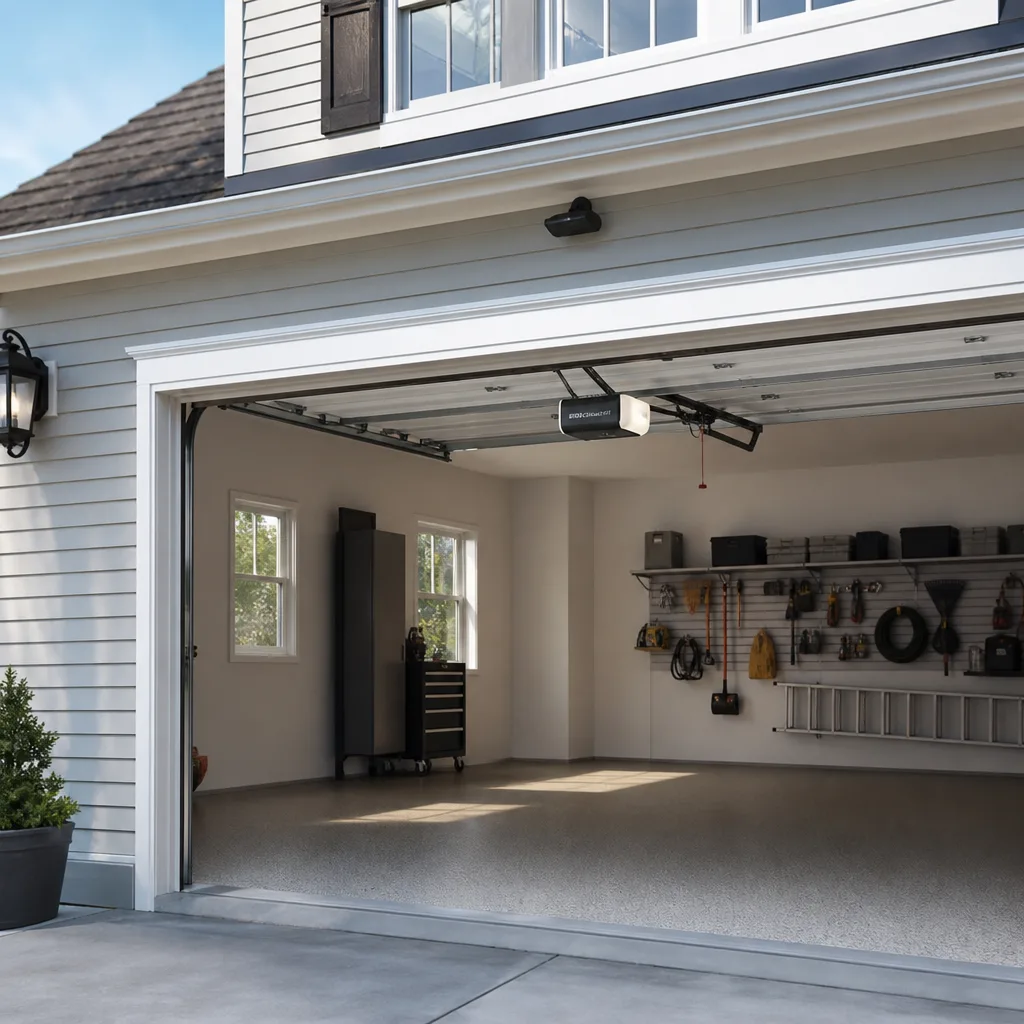
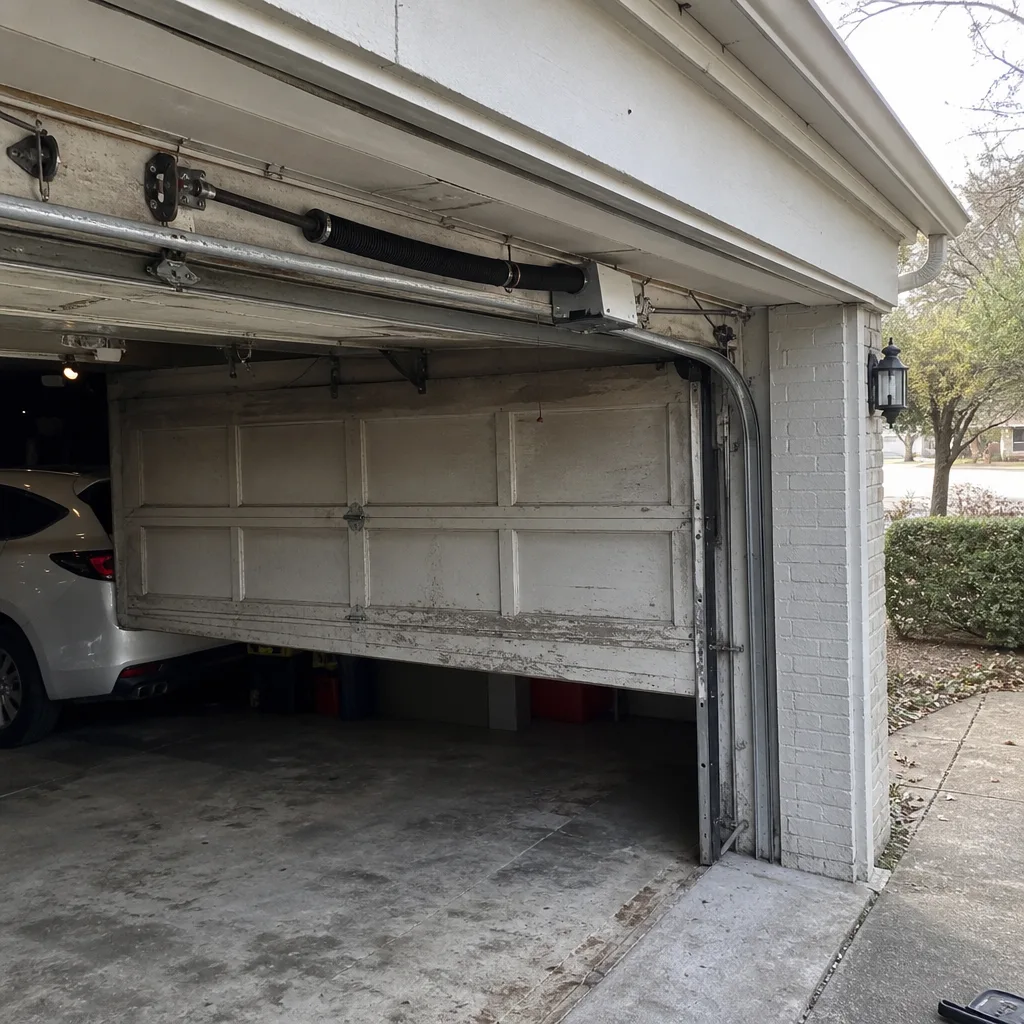 Before
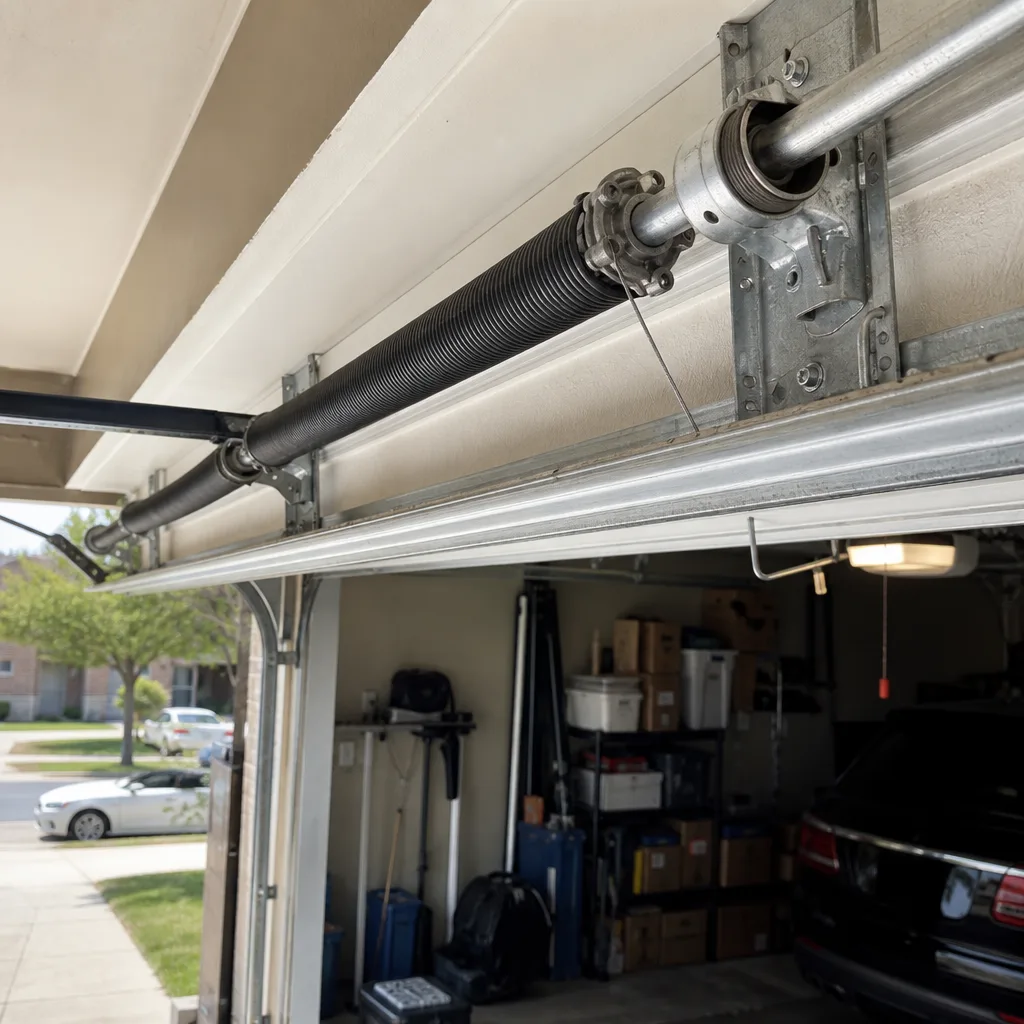 After
After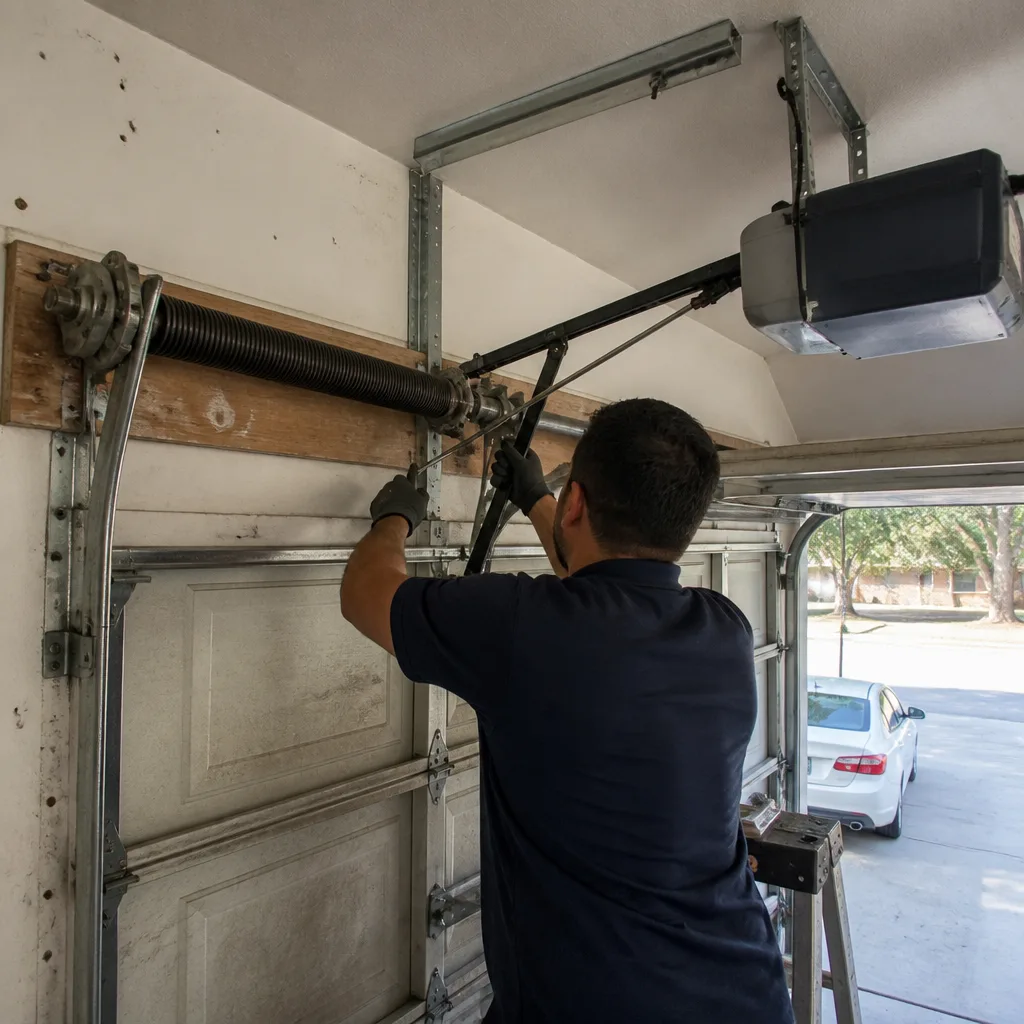 Before
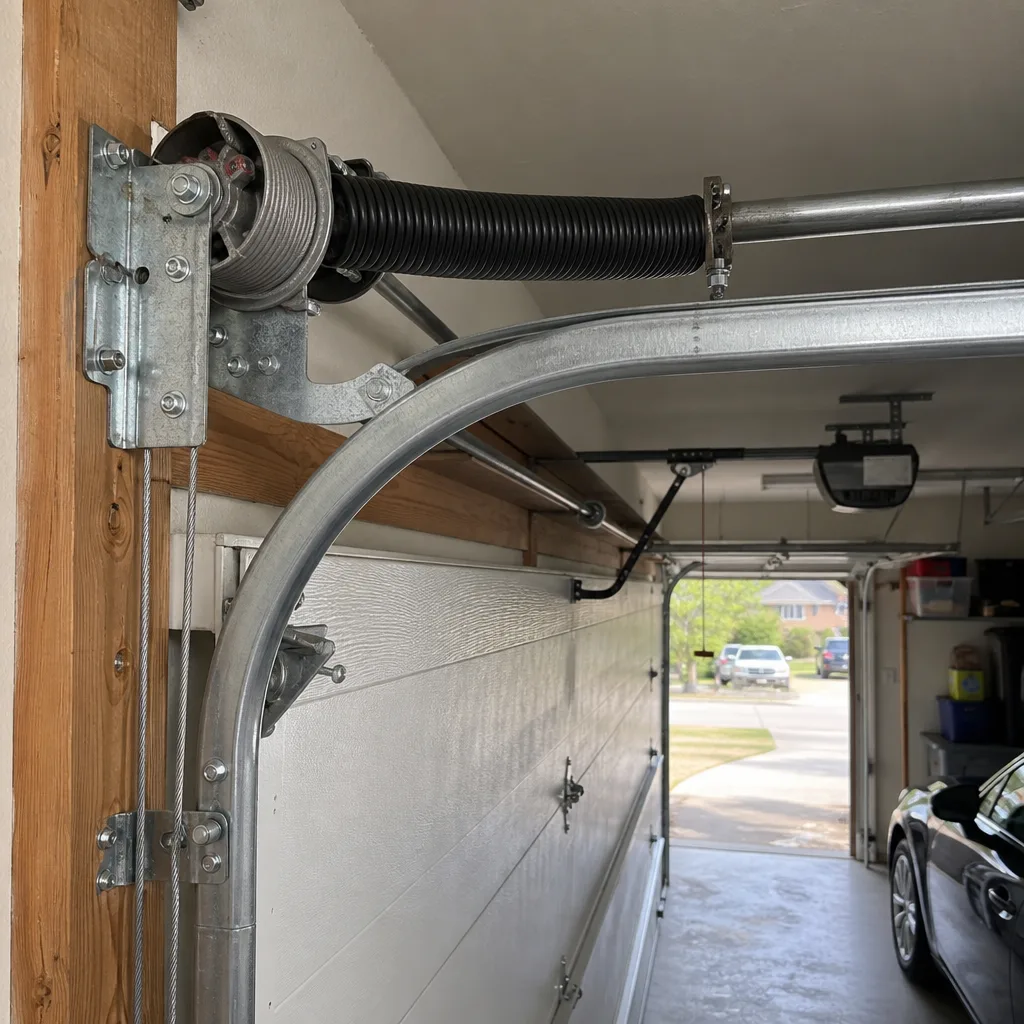 After
After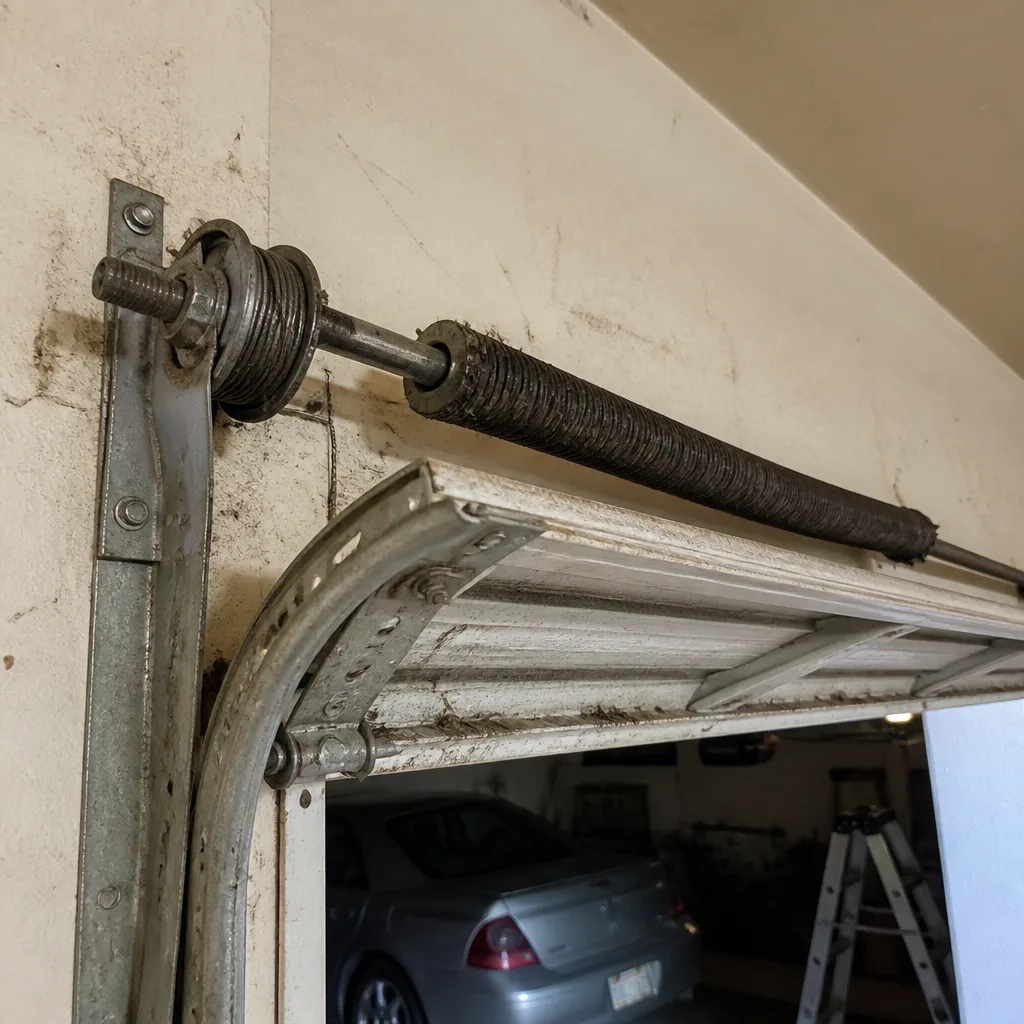 Before
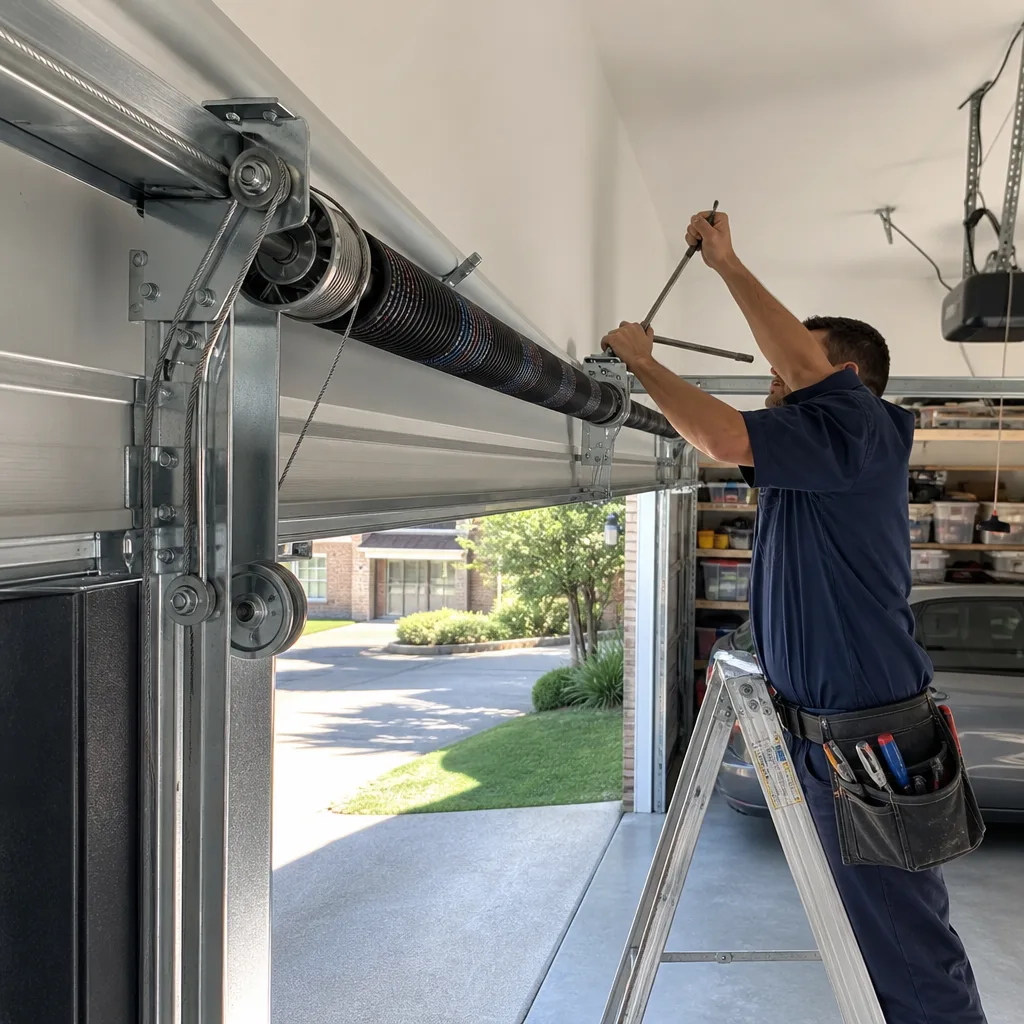 After
AfterGarage Door Permits, Codes & Inspections in TX: What You Need to Know
Most homeowners in Grapevine assume a garage door replacement needs a permit. It usually doesn’t. But change the header, cut into a fire-rated wall, or install a door in a new opening, and you’re in permit territory whether you knew it or not. We’ve been called to jobs where a simple panel swap turned into a three-week delay because the previous owner widened the opening without pulling a permit, and the inspector flagged it during the buyer’s walk-through. This guide explains exactly when Texas law and Grapevine’s adopted codes require a permit, what inspectors look for, and how to protect yourself from surprises that cost money and time. For Garage Door Warning Signs: A Grapevine Homeowner’s Reference Guide, see our companion resource.
Quick Answer
In Texas, a garage door replacement on an existing opening typically does not require a permit. A new installation, structural modification, or any work affecting fire separation between garage and living space does require a permit under Grapevine’s adopted International Residential Code. Wind-load ratings for Tarrant County must also be verified for new doors.
Table of Contents
- When Is a Garage Door Permit Required in Grapevine?
- How Texas Adopts and Amends the IRC
- Wind-Load Ratings: Why Tarrant County Requirements Matter
- Fire Separation Between Garage and Living Space
- How to Pull a Permit: Homeowner vs. Contractor
- What Happens When Non-Permitted Work Surfaces During a Sale
- What Inspectors Actually Check
- Common Mistakes to Avoid
- When to Call a Professional
- Frequently Asked Questions
- The Bottom Line
When Is a Garage Door Permit Required in Grapevine?
Grapevine operates under the 2021 International Residential Code with local amendments, administered by the City’s Building Inspections Division. The threshold question is not whether you’re installing a new door, but whether you’re altering the structure or the building envelope.
No permit required: Replacing a garage door on an existing opening of the same size, without modifying the header, jambs, or surrounding wall. This covers the majority of service calls we handle in Grapevine neighborhoods like Heritage Cove, Silver Lake, and the historic district near Main Street. The door goes in, the opener connects, and the job is done.
Permit required:
- Installing a door in a new opening where none existed before
- Widening or narrowing an existing opening, which affects the header and load path
- Modifying or replacing the header itself
- Any penetration of a fire-rated wall or ceiling between garage and living space
- Converting a carport to an enclosed garage with a door
- Installing a door in an accessory building over 200 square feet if it creates a habitable or conditioned space
The City’s adopted IRC, Chapter 3, Section R105.1, requires permits for “construction, alteration, movement, enlargement, replacement, repair, equipment, use and occupancy, location, removal and demolition of any building or structure.” Grapevine’s administrative interpretation, confirmed in our conversations with the Building Inspections office, draws the line at structural impact and fire safety. A like-for-like replacement crosses neither line.
Homeowners in Colleyville and Southlake sometimes assume the same rules apply. They don’t. Southlake amends the IRC with additional aesthetic review for front-facing garage doors in certain zoning districts. Colleyville has specific sight-line requirements for corner lots. Grapevine’s enforcement is more straightforward, but the threshold for structural work is strictly applied. We’ve seen inspectors in Grapevine red-tag a job because the contractor replaced a 16-foot opening with an 18-foot opening without engineering approval for the new header span.
One detail that catches people off guard: if your garage shares a wall with your living space and you’re installing a door with windows or a pass-through door, the inspector may require documentation that the assembly maintains the required fire-resistance rating. This is not a hypothetical concern in Grapevine’s older homes near Dove Road, where 1970s construction often lacks modern fireblocking.
How Texas Adopts and Amends the IRC
Texas does not have a statewide building code. The Legislature authorizes cities to adopt model codes by reference, and most choose the International Residential Code published by the International Code Council. Grapevine adopted the 2021 IRC effective January 2022, with a set of local amendments published in the city’s Code of Ordinances, Chapter 6, Building Regulations.
This matters because the IRC is a comprehensive document, and cities can amend it in ways that surprise contractors who work across multiple jurisdictions. Grapevine’s amendments include:
- Wind speed designation: Tarrant County is mapped to a 115 mph ultimate design wind speed (3-second gust) in the 2021 IRC. Grapevine does not reduce this; some smaller municipalities do, which creates confusion when a contractor bids a job based on a lower rating.
- Fire separation: Grapevine enforces IRC Table R302.6 without local reduction, requiring 1/2-inch gypsum board on garage walls and ceilings adjacent to living spaces, and 5/8-inch Type X where the garage is below a habitable room. A garage door installation that disturbs this assembly triggers permit and inspection requirements.
- Permit exemptions: Grapevine follows the IRC’s exemption for “ordinary repairs” but defines this narrowly. Replacing a door panel is ordinary. Replacing the track system that attaches to the structure is not, if the attachment method changes the load distribution.
The Texas Department of Insurance maintains a windstorm certification program for coastal counties, but Tarrant County is inland. That does not mean wind-load ratings are optional. Grapevine inspectors verify that new garage doors carry a label certifying compliance with ANSI/DASMA 108, the standard for wind-load resistance of sectional garage doors. We’ve seen inspectors reject doors labeled for 90 mph wind zones in a 115 mph zone. The homeowner pays for removal and replacement.
Texas House Bill 2439, passed in 2019, limits a city’s ability to adopt building codes more stringent than the IRC without specific justification. Grapevine’s amendments have been reviewed for compliance, and the wind-speed and fire-separation provisions stand. What this means practically: you cannot assume a door that passed inspection in Dallas or Fort Worth will pass in Grapevine without verifying the label.
Wind-Load Ratings: Why Tarrant County Requirements Matter
North Texas tornado exposure is not theoretical. Grapevine sits in Tornado Alley, and the April 2012 outbreak that damaged homes near Highway 114 is still referenced in local building discussions. A garage door is the largest opening in most residential structures, and if it fails under wind pressure, the resulting internal pressurization can lift the roof.
The 2021 IRC maps Grapevine to Wind Zone II, with an ultimate design wind speed of 115 mph. This translates to specific requirements for garage doors:
| Door Attribute | Requirement |
|---|---|
| Design pressure rating | Minimum 15 psf (positive) / 15 psf (negative) for most single-story homes; higher for two-story or complex geometry |
| Label standard | ANSI/DASMA 108 or Florida Product Approval (HVHZ) |
| Track attachment | Engineered fasteners into framing, not just jambs; inspector may require pull-test verification |
| Bracing | Vertical reinforcement required for doors over 9 feet wide in some wind-exposure categories |
Most major manufacturers, including Clopay and Amarr, produce doors rated for Grapevine’s zone. The issue is not availability; it’s specification. A homeowner ordering online or through a general contractor may receive a door rated for 90 mph because it’s cheaper and physically identical. The label tells the story, and Grapevine inspectors read labels.
In our experience, wind-load failures during inspection fall into two categories. First, the door itself is under-rated. Second, and more common, the door is rated correctly but the installation lacks the specified track reinforcement or fastener pattern. The IRC requires installation according to the manufacturer’s approved instructions, which for wind-rated doors include specific fastener spacing, track gauge, and jamb attachment details. A technician who treats a wind-rated door like a standard installation creates a code violation even with the right product.
We’ve replaced doors in Grapevine’s newer subdivisions, like those off Kimball Avenue, where the original builder installed code-compliant doors but used inadequate fasteners. After ten years of seasonal expansion and contraction, the track pulls away from the jamb. The homeowner calls for a repair, we discover the underlying issue, and the fix requires permit-triggering structural work. It’s better to verify the installation upfront than to discover the gap during a storm.
Fire Separation Between Garage and Living Space
This is the code requirement that generates the most confusion, and the most expensive callbacks, in Grapevine garage door work.
The IRC requires a fire-resistance-rated separation between garage and habitable space. Table R302.6 specifies:
- Walls separating garage from living space: 1/2-inch gypsum board on the garage side
- Ceilings under habitable rooms: 5/8-inch Type X gypsum board
- Duct penetrations: minimum 26-gauge steel, no openings into garage
- Doors between garage and living space: solid wood 1-3/8 inches thick, or honeycomb steel 1-3/8 inches thick, or 20-minute fire-rated
Where does the garage door enter this? Most garage doors do not penetrate a fire-rated wall; they open to the exterior. But two scenarios create permit-triggering fire-separation issues:
Scenario one: attached garage with living space above. If you’re installing a garage door with a high-lift or vertical-lift track that requires cutting into the ceiling assembly, you may disturb the 5/8-inch Type X protection. This is common in conversions where a standard door is replaced with a taller opening for an RV or lift. The permit application must include a detail showing how the fire rating is maintained.
Scenario two: garage-to-room conversions with a new exterior door. Some Grapevine homeowners convert a rear garage bay to living space and install a new garage door on the remaining bay. The new wall between living space and garage must meet R302.6, and any door in that wall must be fire-rated. We’ve seen DIY projects where a standard interior door was installed; the inspector required full removal and replacement.
Grapevine’s fire marshal conducts spot inspections in addition to building inspections, particularly in multi-family and attached-townhouse construction. A single-family detached home is less likely to see fire-marshal involvement, but the building inspector will flag fire-separation deficiencies. In a home sale, the buyer’s inspector almost always checks garage-to-living-space walls, especially in homes built before 1990 when fireblocking was less consistently applied.
If you’re uncertain whether your project affects fire separation, the safe path is a pre-application conference with Grapevine Building Inspections. The staff will review your plans and identify requirements before you commit to materials or labor. We routinely attend these conferences with homeowners who want certainty before proceeding.
How to Pull a Permit: Homeowner vs. Contractor
Texas law allows either the property owner or the contractor to pull a residential building permit. The choice has real implications for liability, timeline, and cost.
Option 1: Homeowner Pulls the Permit
Grapevine allows owner-occupied single-family homeowners to pull their own permits for work on their primary residence. The advantage is direct control and potentially lower cost, since some contractors markup permit fees. The disadvantage is that the homeowner becomes the “responsible party” on record with the city. If work fails inspection, the city contacts the homeowner, not the contractor. If the contractor abandons the job, the homeowner must find another licensed contractor willing to assume responsibility for work they didn’t perform.
Homeowner-pulled permits also require the homeowner to act as their own general contractor, which means coordinating inspections, providing access, and understanding the correction notices. For a simple garage door replacement on an existing opening, this is manageable. For a structural modification with engineering requirements, it is not advisable for most homeowners.
Option 2: Contractor Pulls the Permit
A licensed contractor pulling the permit creates a direct contractual and regulatory relationship with the city. The contractor is responsible for code compliance, inspection scheduling, and corrections. If the contractor is registered with Grapevine’s contractor registration program, their bond and insurance are on file, which provides a layer of financial protection.
At Mainspring Garage Door Co., we pull permits for all jobs that require them. We do not markup the city’s permit fee, which for residential garage door work in Grapevine is typically $50-$150 depending on project valuation. Our garage door installation in Grapevine includes permit handling, inspection scheduling, and correction of any deficiencies at no additional charge. The 90-Day Done Right Promise applies to permitted work exactly as it does to same-day repairs.
The Liability Question
Texas courts have held that a homeowner who pulls their own permit and hires unlicensed labor may bear liability for defects that cause injury. In contrast, a contractor who pulls a permit under a valid registration assumes statutory responsibility for code compliance. For work involving structural headers, wind-load ratings, or fire separation, we recommend contractor-pulled permits without exception. The savings of a homeowner pull are illusory if a defect creates liability or a sale-delaying correction order.
The permit process in Grapevine typically runs:
- Submit application online or in person with plans, specifications, and contractor registration (if applicable)
- Plan review for structural or fire-separation work; simple replacements may be approved over the counter
- Pay permit fee based on project valuation
- Receive permit card, which must be posted on site
- Schedule rough inspection if structural work; otherwise proceed to final
- Final inspection; approval or correction notice
- Certificate of completion issued; required for some title company clearance letters
Timeline varies from same-day approval for simple replacements to two weeks for structural work requiring engineering review. Grapevine’s Building Inspections office is located at 200 S. Main Street, and staff are available by phone for preliminary questions.
What Happens When Non-Permitted Work Surfaces During a Sale
This is where permit history becomes expensive.
Texas does not require a seller to disclose permit status on the standard Seller’s Disclosure Notice. However, the disclosure asks about “structural modifications” and “work performed without required permits.” A seller who checks “no” and is later found to have non-permitted structural work faces potential fraud liability. More commonly, the issue surfaces during the buyer’s inspection.
We’ve been called to Grapevine homes where the buyer’s inspector noted:
- A widened garage door opening with no permit on file
- A converted carport with a garage door but no certificate of occupancy update
- Living space above a garage with modified ceiling framing and no fire-separation documentation
- A new garage door installation in a historic district without certificate of appropriateness
The consequences cascade. The title company may refuse to insure until corrections are made and inspected. The lender may withhold funding. The buyer may demand a price reduction, escrow holdback, or repair by a licensed contractor with permit and inspection. In a hot market, the seller may absorb the cost to preserve the deal. In a soft market, the buyer may walk.
Who bears the cost? If the non-permitted work was done by a previous owner, the current seller inherits the problem unless they can locate the prior owner and prove fraud, which is rarely practical. If the current owner did the work or hired the contractor, they bear direct responsibility. We’ve seen $2,000 door installations become $8,000 corrections when the opening must be rebuilt to code, re-inspected, and the permit history updated.
The Grapevine Central Appraisal District does not actively cross-reference permits against property records, but the Building Inspections office maintains permanent records. A title search or municipal lien search will reveal open permits and code violations. In our experience, the most common trigger is a conscientious buyer’s inspector who checks permit history as part of due diligence.
The preventive step is simple: pull the permit, pass the inspection, keep the certificate. If you’re buying a home in Grapevine, ask for permit documentation on any garage door modification. If the seller cannot produce it, a call to Grapevine Building Inspections will confirm whether a permit exists. We provide this verification service at no charge for prospective buyers who contact us during their due diligence period. Browse our more guides & resources for additional homeowner tools.
What Inspectors Actually Check
Grapevine building inspectors follow a standardized checklist for garage door installations, but their focus areas reflect local priorities shaped by wind exposure and fire safety history.
Structural verification: For new openings or modified openings, the inspector verifies header size and attachment against the engineered plans or IRC prescriptive tables. A 16-foot opening in a load-bearing wall requires a minimum 2×12 header with appropriate jack studs, or an engineered equivalent. The inspector will probe with an awl to verify lumber species and grade, and check for proper bearing on trimmer studs.
Wind-load label: The inspector photographs the door label showing ANSI/DASMA 108 compliance and the design pressure rating. The label must be legible and permanently affixed. We’ve seen inspectors reject doors where the label was painted over or removed by the installer.
Track and hardware: Installation must match the manufacturer’s wind-load installation instructions, which specify fastener type, spacing, and minimum jamb material. For a 115 mph zone, this typically means 14-gauge or heavier track, #14 x 1-5/8 inch lag screws into solid framing at specified intervals, and vertical reinforcement struts on wide doors.
Fire separation: Where the garage shares a wall or ceiling with living space, the inspector verifies gypsum board coverage and penetration sealing. A garage door opener electrical box in a fire-rated wall must be enclosed in a listed assembly or protected by 1/2-inch gypsum board.
Opener safety: Since 1993, federal law requires automatic reversal on garage door openers. Grapevine inspectors verify this function on new installations. The photo-eye alignment and force-setting tests are quick but non-negotiable. We test these on every garage door opener in Grapevine we install, before the inspector arrives.
Emergency release: The inspector confirms that the manual release mechanism is accessible and functional. This is a life-safety item, not optional.
Inspections are scheduled through Grapevine’s online portal or by phone. The inspector typically arrives within a two-hour window and requires adult presence for interior access. Failed inspections generate a correction notice with specific deficiencies and a re-inspection fee of approximately $50. Multiple failures trigger a supervisory review.
Common Mistakes to Avoid
- Assuming replacement equals no permit without verifying opening dimensions. Even a one-inch width change can trigger structural review in Grapevine. Measure twice, or have us measure.
- Ordering a door based on price without checking the wind-load label. That “great deal” online may be a 90-mph door that fails inspection. We verify ratings on every Clopay and Amarr door we source.
- Hiring a handyman who “does doors on the side.” Unlicensed installers rarely carry the insurance or registration required for permit work, and their installations often lack the fastener detail that inspectors verify.
- Ignoring fire separation in 1970s and 1980s Grapevine homes. Original construction in neighborhoods like Timberline Ridge often lacks modern fireblocking. A door replacement that disturbs existing conditions may require upgrading the entire assembly.
- Failing to obtain a certificate of completion. The permit is not closed until the final inspection passes and the certificate issues. An open permit clouds title and complicates sale.
- Assuming Southlake or Colleyville rules apply in Grapevine. Each city interprets the IRC independently. What passed in Keller may fail here.
- Skipping the pre-application conference for complex jobs. Grapevine staff will identify requirements that save weeks of correction time. The 30-minute meeting is free.
When to Call a Professional
Call a licensed garage door contractor when your project involves structural modification, fire-rated assemblies, or any uncertainty about permit status. The cost of professional guidance is minor compared to the cost of correction orders, sale delays, or liability exposure.
At Mainspring Garage Door Co., we handle permit research, application, and inspection scheduling for Grapevine homeowners. Our technicians arrive with the parts to complete most jobs in one visit, and our 90-Day Done Right Promise covers every installation we perform. For a free estimate and permit assessment, call (817) 668-7138. A live person answers, day or night.
Frequently Asked Questions
No, if you’re installing a new door on an existing opening of the same size without structural modification. Yes, if you’re changing the opening size, modifying the header, or affecting fire separation between garage and living space. Call (817) 668-7138 and we’ll assess your specific situation at no charge.
Residential garage door permits in Grapevine typically range from $50 to $150 based on project valuation. Structural modifications requiring engineering review may incur additional plan review fees. We do not markup permit fees on jobs we manage.
Grapevine requires doors rated for 115 mph ultimate design wind speed per the 2021 IRC. Look for an ANSI/DASMA 108 label showing compliance. We verify this rating on every door we install, including models from Clopay and Amarr rated for North Texas conditions.
Texas law allows either. For structural or fire-separation work, we recommend having your contractor pull the permit to establish clear regulatory responsibility and protect you from liability. For simple replacements on existing openings, a homeowner pull is permissible if you’re comfortable coordinating inspections.
The buyer may demand correction, escrow holdback, or price reduction. The title company may require permit clearance before closing. In severe cases, the city may issue a correction order requiring permitted reconstruction. Keeping permit certificates with your home records prevents this entirely.
Simple replacements approved over the counter: same day to 48 hours. Structural modifications requiring plan review: one to two weeks. Inspection scheduling typically adds two to five business days after work completion. We schedule inspections automatically for jobs we manage.
The Bottom Line
Garage door permits in Grapevine are not about bureaucracy. They’re about verifying that the largest opening in your home will stand up to North Texas wind, maintain fire separation where lives depend on it, and pass scrutiny when you sell. Most replacements need no permit. Structural work always does. The cost of certainty is a phone call and a modest fee. The cost of guessing is measured in delays, corrections, and lost deals. Know the line, pull the permit when required, and keep the certificate with your permanent records.
Written by Carl Dutton, Owner at Mainspring Garage Door Co., serving Grapevine since 2016.