
Last updated September 10, 2026
Full 25-point door and opener safety check with every visit - springs, cables, rollers, tracks, and your LiftMaster or Chamberlain opener included
You get a price before we start. It does not change when the truck arrives.
 Before
 After
After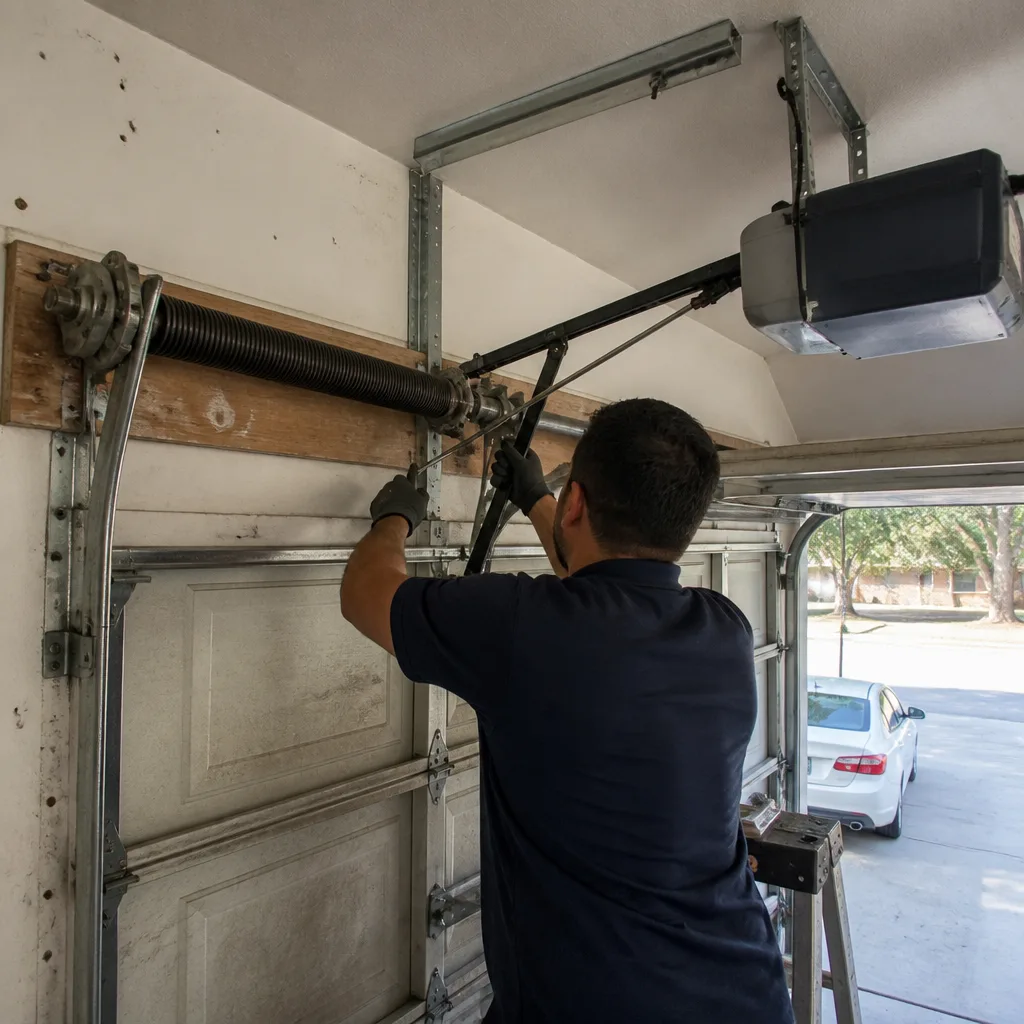 Before
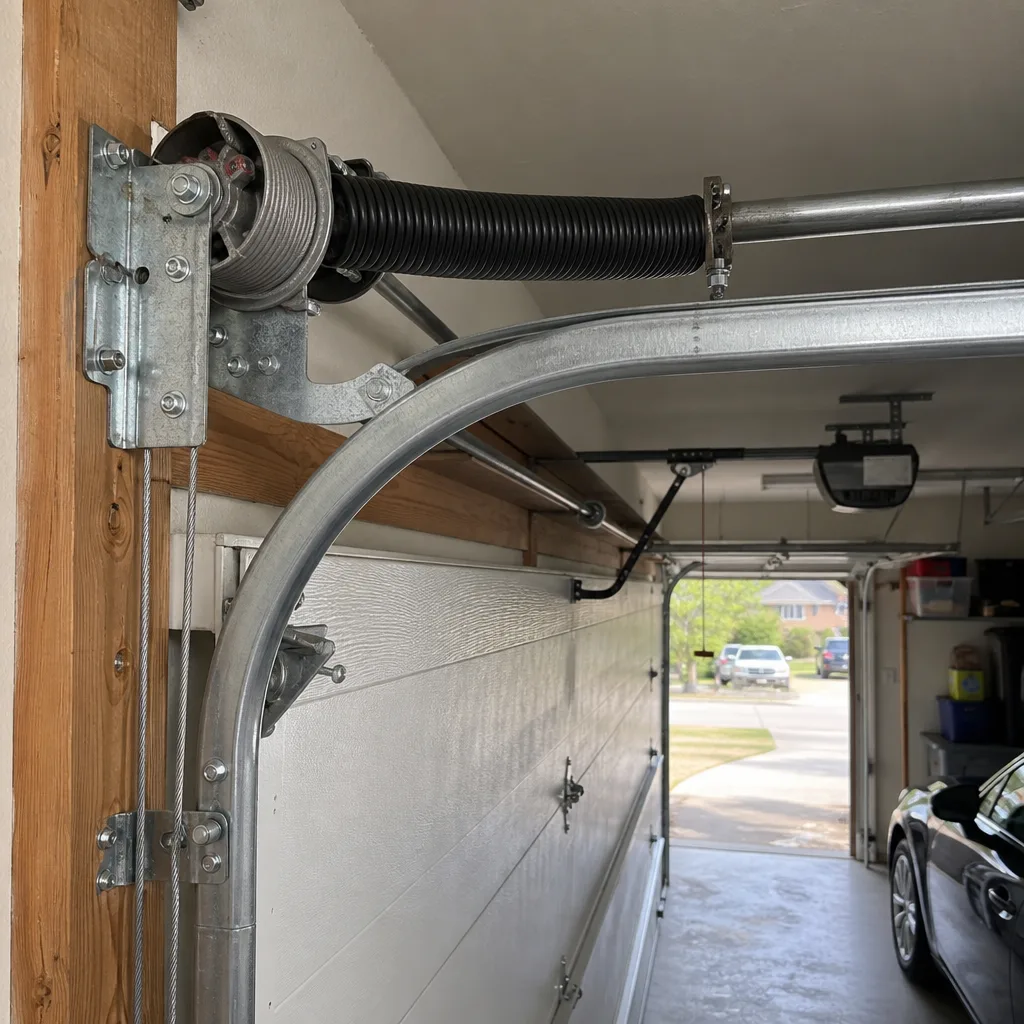 After
After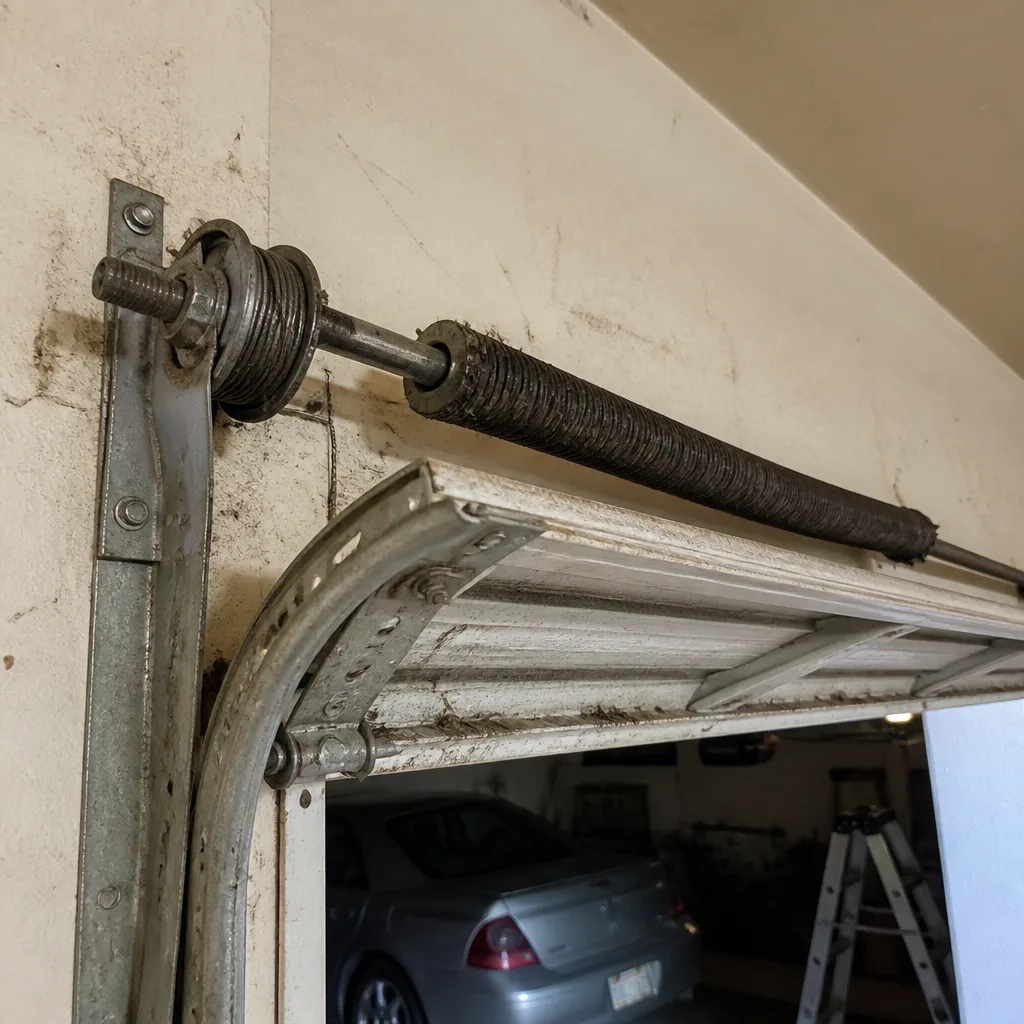 Before
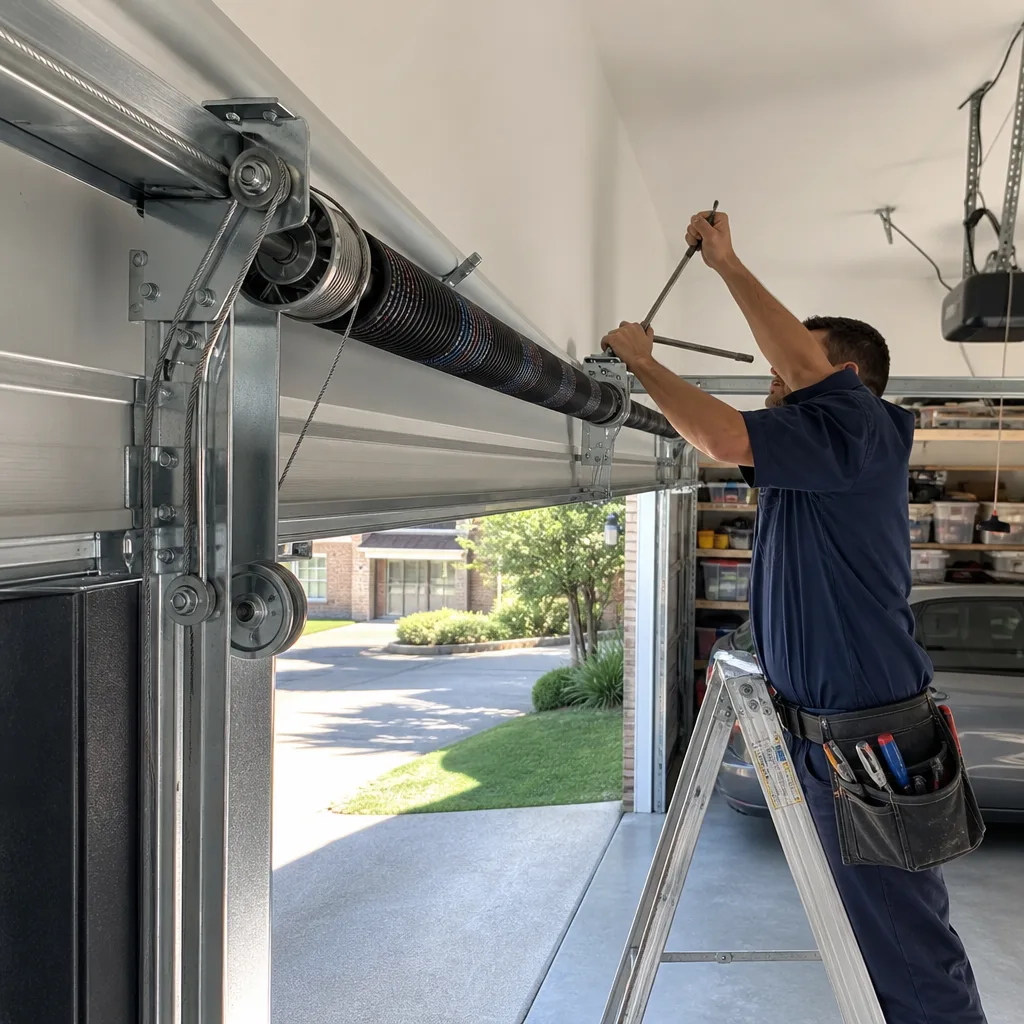 After
AfterGarage Door Repair Maintenance Checklist for Grapevine Homeowners
WD-40 on torsion springs isn’t maintenance. It’s a countdown. In 42 years of service records across North Texas, we’ve traced more premature spring failures back to that single mistake than any other homeowner habit. Grapevine’s combination of hard water mineral deposits, sudden temperature swings, and hail season puts unique stress on every component. This checklist is built around the six failure points that generate four out of five Garage Door Repair calls we receive from Grapevine neighborhoods like Silver Lake Estates, Dove Creek, and Heritage Oaks. You’ll learn which tasks keep your door running quiet and which ones can put you in the emergency room.
Quick Answer
A proper garage door maintenance checklist for Grapevine homeowners includes a monthly 90-second visual inspection, quarterly lubrication of rollers and hinges with silicone or lithium grease (never WD-40), bi-annual auto-reverse testing with a proper 2×4 block, annual professional inspection of springs and cables, and seasonal checks before March hail season and October cold fronts - see our Garage Door Warning Signs: A Grapevine Homeowner’s Reference Guide for what to watch for. Leave torsion spring adjustment, cable replacement, and opener force-limit calibration to a licensed technician - these components store lethal tension and are regulated by Texas door safety codes.
Table of Contents
- The Six Failure Points: What 42 Years of Grapevine Service Records Reveal
- The Monthly 90-Second Visual Inspection (Tied to Storm Season)
- What to Lubricate, What to Leave Alone, and With What
- Testing Auto-Reverse Sensitivity Correctly (Most Homeowners Fail This)
- The Three Sounds a Grapevine Garage Door Makes Before Failure
- The Owner-Safe Boundary: Where DIY Ends and a Licensed Tech Begins
- What a Professional Annual Inspection Covers That You Cannot
- Common Mistakes to Avoid
- When to Call a Professional
- Frequently Asked Questions
The Six Failure Points: What 42 Years of Grapevine Service Records Reveal
Every repair call tells a story. After four decades, the patterns are unmistakable. These six components account for roughly 80% of emergency dispatches in Grapevine and the surrounding northeast Tarrant County corridor.
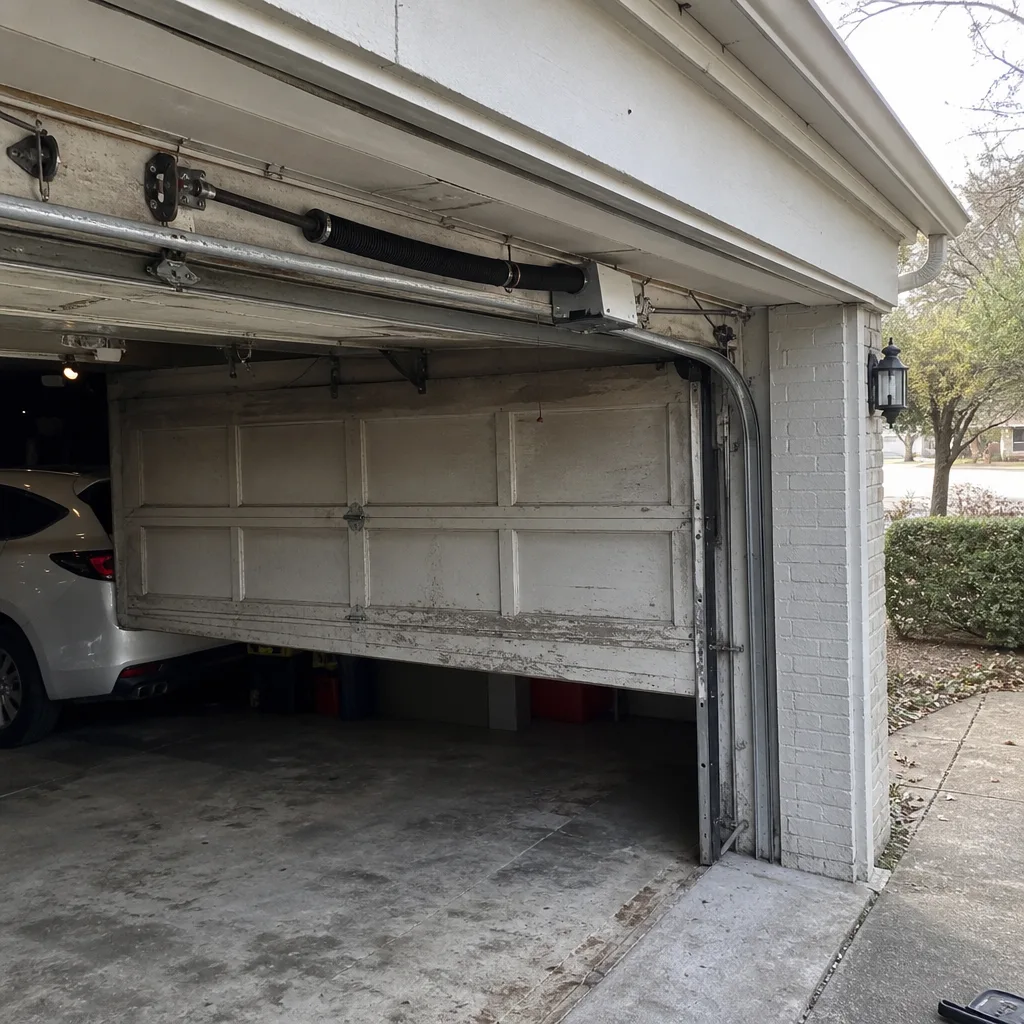
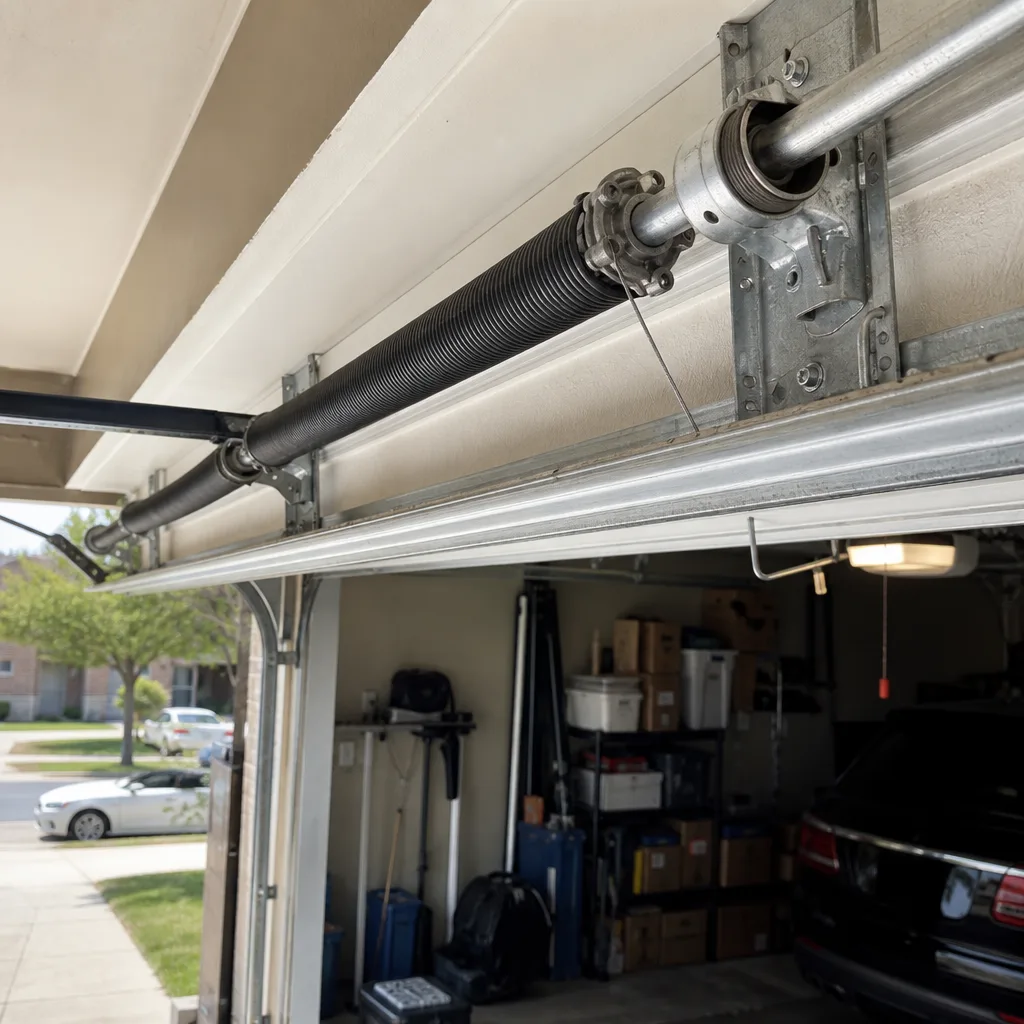
Torsion springs carry the full weight of your door. A standard double-car door in Grapevine weighs between 150 and 250 pounds, and the springs counterbalance that load hundreds of times per month. In our climate, thermal cycling - 40-degree swings inside a single day are common in March and October - fatigues the steel faster than in stable climates. Most residential torsion springs are rated for 10,000 cycles. A family with teenagers and multiple vehicles can burn through that in five years.
Cables run alongside the door and transfer spring tension to the bottom brackets. They fray from abrasion against poorly aligned tracks and corrode from humidity spikes before Grapevine thunderstorms. A frayed cable doesn’t fail gradually. It snaps.
Rollers guide the door in the track. Steel rollers without ball bearings grind flat spots. Nylon rollers crack from UV exposure if the garage faces west and catches afternoon sun. Either condition creates the rhythmic thumping that precedes derailment.
Hinges at each panel junction wear at the pin. The center hinge on the top panel works hardest because it carries the opener arm’s pull. We’ve replaced hundreds in Grapevine’s 1980s-era subdivisions where original hinges have simply worn through.
Weatherstripping seems minor until it isn’t. Grapevine sits in Tornado Alley’s southern edge, and a compromised bottom seal lets wind-driven rain pool under the door. That moisture rusts the bottom section from the inside out, especially on older steel doors.
Opener force settings drift. The force limit that was correct in 2019 is too high after springs have weakened. An opener that doesn’t sense resistance properly will crush an obstruction or, worse, keep pulling a door with a broken spring until the opener itself strips gears.
Our Garage Door Repair in Grapevine records show that homeowners who address these six points on schedule average 60% fewer emergency calls over a ten-year period. The checklist below is organized around them.
The Monthly 90-Second Visual Inspection (Tied to Storm Season)
Grapevine’s weather calendar drives the maintenance rhythm. March through May brings the highest hail and wind risk. October cold fronts arrive with little warning. Run this inspection on the first Saturday of March, May, September, and November. It takes 90 seconds with the door closed and the opener disconnected.
- Stand inside the garage with the door down. Look across the full width of the bottom section. The gap between the door and the floor should be even. If light shows through on one side, a spring may have lost tension or a cable has stretched unevenly.
- Inspect the torsion spring for gaps in the coils. A healthy spring has coils that sit tight together when the door is down. A gap of even a quarter inch means the spring has lost preload and is working harder than designed. Do not touch the spring. Note the gap and call for service.
- Trace each cable from the bottom bracket to the drum above. Look for fraying, rust blooming, or any cable that has jumped its groove on the drum. A cable off the drum is a door that will drop unevenly or jam.
- Check the bottom weatherstrip. It should be flexible, not cracked, and make continuous contact with the floor. Grapevine’s summer heat bakes rubber stiff; winter cold makes it brittle. Replace when it loses resilience.
- Test the manual release. Pull the red handle and lift the door manually. It should move smoothly and stay open at waist height without drifting down. If it drifts, the springs are out of balance.
- Re-engage the opener and listen. The motor should run without straining. Any grinding from the opener unit itself, rather than the door, means internal gear wear.
After Grapevine’s March 2024 hail season, we saw a 40% spike in calls from homeowners who had skipped this inspection. Hail doesn’t just damage roofs. It dents tracks, knocks rollers out of alignment, and drives debris into hinge pins. The 90 seconds in early March would have caught most of it.
What to Lubricate, What to Leave Alone, and With What
This is where most maintenance goes wrong. The wrong product on the wrong part turns a protective task into an accelerant for failure.
Silicone spray goes on the weatherstripping, the vertical track interior, and the opener chain or screw drive. It repels moisture without attracting dust. We recommend a product with a straw nozzle for precision. Apply a light film, then run the door twice to distribute. Wipe excess from the track with a rag - pooled lubricant collects grit.
White lithium grease goes on the hinge pins and roller bearings (if steel). It stays put through temperature swings better than silicone. Apply a pea-sized amount to each hinge pin, then cycle the door. The movement works the grease into the bearing surface.
Never lubricate the torsion spring. This is the WD-40 mistake. Penetrating oils and light lubricants attract dust and grit, which abrade the spring surface. A coated spring runs hotter during cycling, accelerating metal fatigue. If a spring is squeaking, the noise is usually from the bearing plates at each end - lubricate those lightly with lithium grease, not the spring body.
Never lubricate the opener rail. Modern chain-drive openers have a Teflon-impregnated rail that needs no lubrication. Adding grease collects dust and creates a grinding paste. Belt-drive openers need no rail lubrication at all.
Never lubricate nylon rollers. They are self-lubricating. Grease attacks the nylon compound and causes swelling in the track.
| Component | Product | Frequency |
|---|---|---|
| Hinge pins | White lithium grease | Quarterly |
| Steel roller bearings | White lithium grease | Quarterly |
| Track interior (vertical only) | Silicone spray, light film | Quarterly |
| Weatherstripping | Silicone spray | Quarterly |
| Opener chain or screw | Silicone spray or manufacturer-specified lube | Bi-annually |
| Torsion spring | None - leave dry | N/A |
| Opener rail | None - leave dry | N/A |
| Nylon rollers | None - leave dry | N/A |
In Grapevine’s hard water areas, mineral deposits can crystallize on hinge pins and create a grinding paste even without wrong lubrication. If you see white buildup, wipe it with a vinegar-dampened cloth before applying fresh grease.
Testing Auto-Reverse Sensitivity Correctly (Most Homeowners Fail This)
Every garage door opener manufactured after 1993 has two auto-reverse systems: mechanical contact and photoelectric. Most Grapevine homeowners test only one, and they test it wrong.
The photoelectric test is the one people know. Block the beam with your foot while the door closes. It should reverse immediately. This test is valid but incomplete. It confirms only that the sensors have power and alignment. It says nothing about force sensitivity.
The mechanical contact test is where failures hide. Federal law (UL 325) requires the door to reverse within two seconds of contacting an obstruction. Most homeowners test this with their hand or a broom handle. This is wrong. A hand pulls away instinctively. A broom handle is too light and may flex rather than trigger the sensor.
Use a solid 2×4 block laid flat on the floor in the door’s path. The door must contact the block and reverse on first contact, not after pressing down. If the door continues to compress the block, the force setting is too high. This is common on older openers paired with weakening springs - the opener compensates by pulling harder, masking the spring problem while creating a crushing hazard.
Test monthly in Grapevine, where humidity and temperature swings affect opener electronics more than in drier climates. After testing, check that the 2×4 shows no dent or compression mark. Any indentation means the door pressed too long before reversing.
Adjusting opener force limits requires a trained technician. The adjustment screws interact with spring balance, door weight, and track alignment. A homeowner who turns the wrong screw can create a door that reverses on a stiff breeze or one that won’t reverse on a child. Both are dangerous. Both violate Texas residential door safety standards.
The Three Sounds a Grapevine Garage Door Makes Before Failure
Sound is the earliest warning system. These three noises precede nearly every spring and cable failure we’ve responded to in Grapevine’s established neighborhoods.
The “shotgun” snap. A single loud crack, usually when the door is opening or at full open position. This is a torsion spring breaking. The sound is unmistakable once you’ve heard it. After the snap, the door will feel heavy to lift manually, or the opener will strain and may not move the door at all. Do not operate the door. The remaining spring is carrying double load and is at high risk of immediate secondary failure.
The “coffee grinder” rumble. A rhythmic, low-frequency grinding that matches door movement speed. This is a roller with a seized bearing or a hinge pin that has worn oval. The vibration transfers through the entire door system. Left unaddressed, the damaged roller can jump the track or the hinge can tear through the door section. In Grapevine, we see this most often on west-facing doors where afternoon heat has degraded lubrication.
The “slinky” twang. A metallic pinging or popping sound, irregular, from one side of the door. This is a fraying cable unwinding from the drum unevenly. Each pop is a strand breaking. The cable is living on borrowed time. A cable failure with the door open drops that side of the door instantly. If someone is near the door, the falling edge can cause serious injury. If the door is closed, the remaining cable and spring create a dangerous imbalance.
Any of these sounds means the door is telling you its condition. The “shotgun” demands immediate stop-use. The “coffee grinder” and “slinky” give you days or weeks, but not months. We’ve replaced springs in Grapevine homes where the homeowner heard the “slinky” for six months and “meant to call.” The cable failed at 6:00 AM on a Saturday, trapping two vehicles inside before a family vacation.
The Owner-Safe Boundary: Where DIY Ends and a Licensed Tech Begins
Texas does not require a state license for garage door repair, but Grapevine follows the 2018 International Residential Code with local amendments that specify installation standards for torsion spring systems. For help choosing qualified help, see How to Hire a Garage Door Contractor in Grapevine: A Step-by-Step Guide. More importantly, the physics don’t care about permits. These components store enough energy to kill or maim.
Owner-safe tasks:
- Visual inspection of all components from a safe distance
- Lubrication of hinges, rollers (if steel), and weatherstripping with correct products
- Photoelectric sensor cleaning and alignment
- Manual release operation and basic door balance test
- Weatherstripping replacement
- Remote battery replacement and reprogramming
- Track debris removal (with door closed and opener unplugged)
Tasks requiring a trained technician:
- Torsion spring adjustment, repair, or replacement. A standard 16×7 door spring stores roughly 1,000 foot-pounds of torque. Winding bars must be the correct diameter and inserted fully. A slipping bar or miscalculation releases that energy instantly. We’ve seen broken wrists, facial fractures, and one fatality in the North Texas trade. The risk is not theoretical.
- Cable replacement. Cables are under full spring tension even when the door is down. Improper handling can whip a cable with enough force to lacerate.
- Bottom bracket replacement. These brackets anchor the cable and are under constant tension. They are deliberately designed to be difficult to remove without proper tools.
- Opener force-limit adjustment. As described above, this interacts with spring balance and affects safety compliance.
- Track realignment after impact. A dented or bent track may appear simple to bend back. Doing so without relieving spring tension can derail the door or distort the section.
The boundary is simple: if the component is under tension when the door is in the rest position, it is not an owner task. This covers springs, cables, and bottom brackets. Everything else is learnable with care and the right information.
Our Garage Door Installation in Grapevine crews are trained to the K.E.Y.S. standard - Krafted right, Every time, Your home first, Standing behind it. That includes never sending a homeowner back to a door we wouldn’t let our own family operate.
What a Professional Annual Inspection Covers That You Cannot
A homeowner with this checklist can prevent most failures. But some conditions require trained eyes, calibrated tools, and the experience of having seen ten thousand doors.
Spring torque measurement. We use a winding-bar torque gauge to verify that each spring carries its design load. A spring can look intact while having lost 30% of its preload. The door still opens, but the opener works harder, the cables wear unevenly, and the remaining spring fails prematurely.
Cable drum inspection. The cable winds onto a grooved drum that must maintain precise geometry. We check for groove wear, flange cracks, and set-screw security. A drum that lets cable stack unevenly creates the “slinky” sound and eventual failure.
Section structural integrity. Steel doors develop internal rust where the outer skin meets the frame, invisible until the section starts to bow. Wood doors rot at the bottom rail from splashback. We probe and sound-test to find weakness before it shows.
Opener force and limit calibration. We test with a calibrated load cell, not a 2×4. The door must reverse at 15 pounds of obstruction force or less. Most homeowner-adjusted openers test at 25 to 40 pounds.
Hardware torque audit. Every bolt, lag screw, and bracket in the system vibrates loose over cycles. We torque-check the track hangers, jamb brackets, and opener header bracket. A loose header bracket is a common cause of opener rail flex and premature gear wear.
Neighborhood-specific knowledge. In Grapevine’s older developments near Main Street, original doors from the 1980s and 1990s often have obsolete hardware. We’ve maintained relationships with suppliers for discontinued parts. A technician who knows that your Wayne Dalton TorqueMaster system needs a specific conversion kit saves you from a full door replacement that a less experienced shop might recommend.
Our $89 Seasonal Tune-Up covers this full inspection, lubrication with correct products, and written documentation of door condition. Explore more guides & resources to keep your door running smoothly year-round. Most Grapevine homeowners schedule it in September, before the holiday season when door usage spikes and our schedule fills.
Common Mistakes to Avoid
- Using WD-40 on torsion springs. The light oil attracts dust, creates abrasive slurry, and accelerates metal fatigue. We’ve replaced springs in Grapevine that failed two years early because of this single error.
- Testing auto-reverse with a hand or light object. A hand pulls away. A broom flexes. Only a solid 2×4 block gives a valid test of force sensitivity.
- Ignoring the door after a hailstorm. Grapevine’s March and April hail doesn’t just dent cars. It dents tracks, knocks sensors out of alignment, and drives debris into roller bearings. Inspect within 48 hours of any significant storm.
- Adjusting opener force limits to compensate for a heavy door. This masks spring failure and creates a crushing hazard. The correct response to a heavy-feeling door is spring service, not opener adjustment.
- Lubricating the opener rail. Modern rails need no lubrication. Added grease collects dust and creates a grinding compound that wears the trolley.
- Skipping the manual release test. If the opener fails during a power outage and you haven’t practiced the release, you’re trapped or locked out. Test monthly.
- Waiting for total failure. A spring with a visible gap, a cable with visible fraying, or a hinge with visible crack will fail. The only question is when, and whether it inconveniences you or injures someone. Schedule at the first sign.
When to Call a Professional
Call when you hear the “shotgun,” “coffee grinder,” or “slinky.” Call when the door feels heavy manually, reverses inconsistently, or has been struck by vehicle or debris. Call when springs show any gap, cables any fray, or hinges any crack. Call after any Grapevine hailstorm that dents your car - your door took the same impact.
Mainspring Garage Door Co. offers free estimates in Grapevine. Our phones are answered by a live person, 24/7, including nights, weekends, and holidays. Most repairs are completed in a single visit because our trucks carry springs, cables, and openers for all major brands. Every job is backed by our 90-Day Done Right Promise: if it’s not right, we come back, no paperwork, no arguing, in writing. Call (817) 668-7138 for a free estimate.
Frequently Asked Questions
Run the 90-second visual inspection monthly, lubricate quarterly, test auto-reverse monthly, and schedule a professional inspection annually. In Grapevine, add an extra inspection in early March before hail season and in late October before cold fronts arrive. Call (817) 668-7138 to schedule your $89 Seasonal Tune-Up.
No. Torsion springs store lethal energy and require specialized winding bars and training. Even experienced DIY homeowners have suffered serious injuries from improper spring handling. Texas residential code and manufacturer warranty both require professional installation. The cost of professional spring replacement is far less than an emergency room visit.
A loud bang or snap during operation is almost always a broken torsion spring. Stop using the door immediately. The remaining spring is overloaded and may fail without warning. Operating with a broken spring can damage the opener gears or cause cable derailment. Call for emergency service.
Use white lithium grease on hinge pins and steel roller bearings. Use silicone spray on weatherstripping, vertical track interiors, and opener chains. Never use WD-40 on any garage door component. Grapevine’s temperature swings and hard water make proper lubricant selection especially important for long component life.
Test photoelectric sensors by blocking the beam with your foot during closing - the door should reverse immediately. Test force sensitivity with a solid 2×4 block laid flat in the door’s path - the door should reverse on first contact without compressing the block. If either test fails, stop using the door and call for service. Do not attempt to adjust force limits yourself.
A professional tune-up includes torque measurement of springs, cable and drum inspection, section structural check, opener force and limit calibration with calibrated equipment, hardware torque audit, lubrication with correct products, and written condition documentation. Our $89 Seasonal Tune-Up covers all of this and is available throughout Grapevine and northeast Tarrant County.
The Bottom Line
Garage door maintenance in Grapevine is not complicated, but it is specific. The wrong lubricant accelerates failure. The wrong test gives false confidence. The wrong boundary between owner tasks and professional tasks can send you to the hospital. Follow this checklist on schedule: monthly inspection, quarterly lubrication with correct products, monthly auto-reverse testing with a 2×4 block, and annual professional service. Address the three warning sounds immediately. Respect the tension in springs and cables. A door that runs quiet, reverses properly, and passes inspection is a door you don’t have to think about. That’s the standard we build every job to at Mainspring.
Standing offers that never disappear: $50 Off Any Repair Over $250, Free Second Opinion on any written estimate, $89 Seasonal Tune-Up, and a permanent 5% discount for seniors and veterans. Call (817) 668-7138 for a free estimate or to schedule your Seasonal Tune-Up.
Written by Carl Dutton, Owner at Mainspring Garage Door Co., serving Grapevine since 2016.